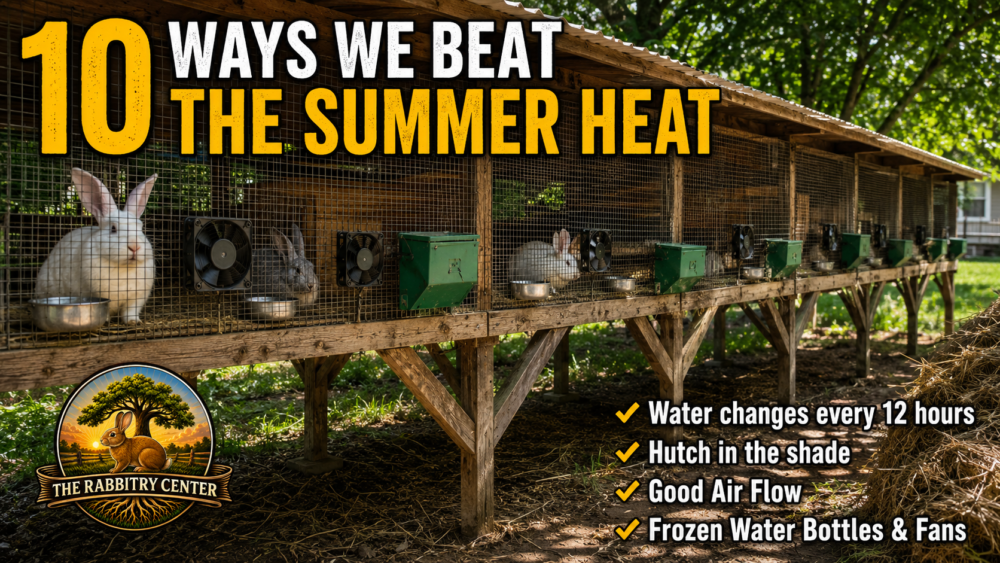
10 Ways To Beat the Heat: How We Keep Rabbits Healthy During Summer
By Bobby – The Rabbitry Center
Summer is one of the most challenging times of the year for rabbits. While rabbits are naturally built to handle cold weather, prolonged heat can quickly lead to stress, reduced fertility, and even heat stroke if proper precautions aren’t taken.
At The Rabbitry Center, we’ve developed a management system that allows us to successfully raise healthy litters—even during weeks of 90°F temperatures. Here are the methods we rely on every summer.
1. Start With Proper Ventilation
The biggest mistake many rabbit owners make is housing rabbits in enclosed wooden hutches.
While they may look attractive, they often:
- Hold moisture
- Harbor bacteria
- Restrict airflow
- Trap heat
Instead, we recommend wire cage floors that allow air to circulate beneath the rabbit. Better airflow helps remove body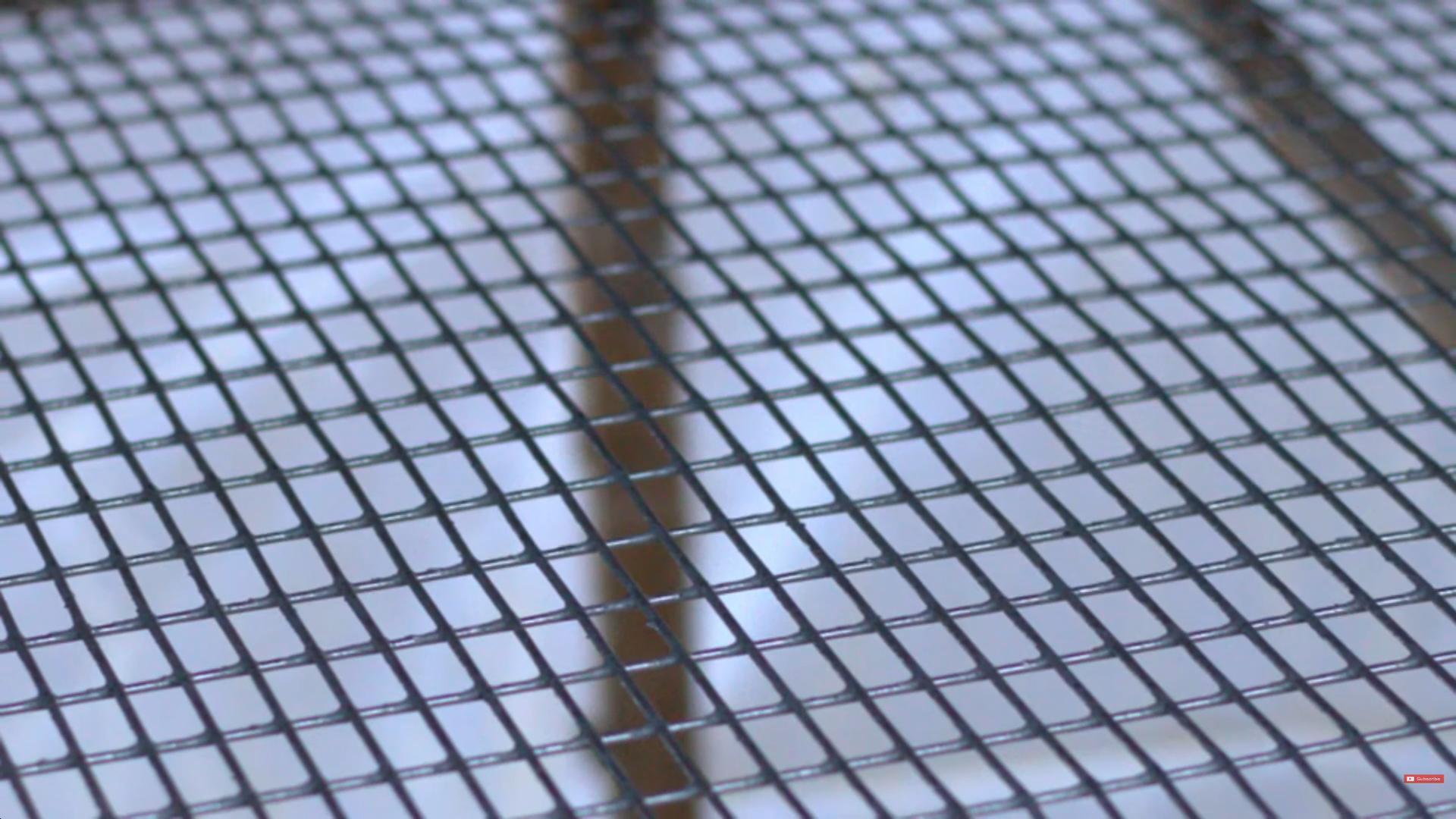 heat naturally and keeps both adults and kits much more comfortable.
Rabbits are designed to tolerate cold weather surprisingly well. Summer—not winter—is usually the season that causes the greatest stress. Good ventilation is one of the best defenses against overheating.
2. Shade Is Your First Line of Defense
Your rabbitry should receive full-time shade during the hottest part of the day.
Natural shade from matur e trees is ideal, but if you don’t have trees, consider:
- Shade cloth
- Portable canopies
- Planting fast-growing shade trees such as maples or weeping willows
Shade alone can reduce temperatures dramatically around your rabbitry and is often the difference between comfortable rabbits and heat-stressed rabbits.
Weeping willow trees offer another bonus—they provide excellent chew sticks that help rabbits naturally wear their teeth.
3. Solar Powered Fans
Every rabbit handles heat differently.
Some rabbits tolerate warm weather much better than others, so once temperatures begin climbing above 80°F, we start watching every rabbit in the rabbitry much more closely.Watch for early signs of heat stress:
- Panting
- Lethargy
- Stretching out to dissipate heat
- Reduced activity
- Loss of appetite
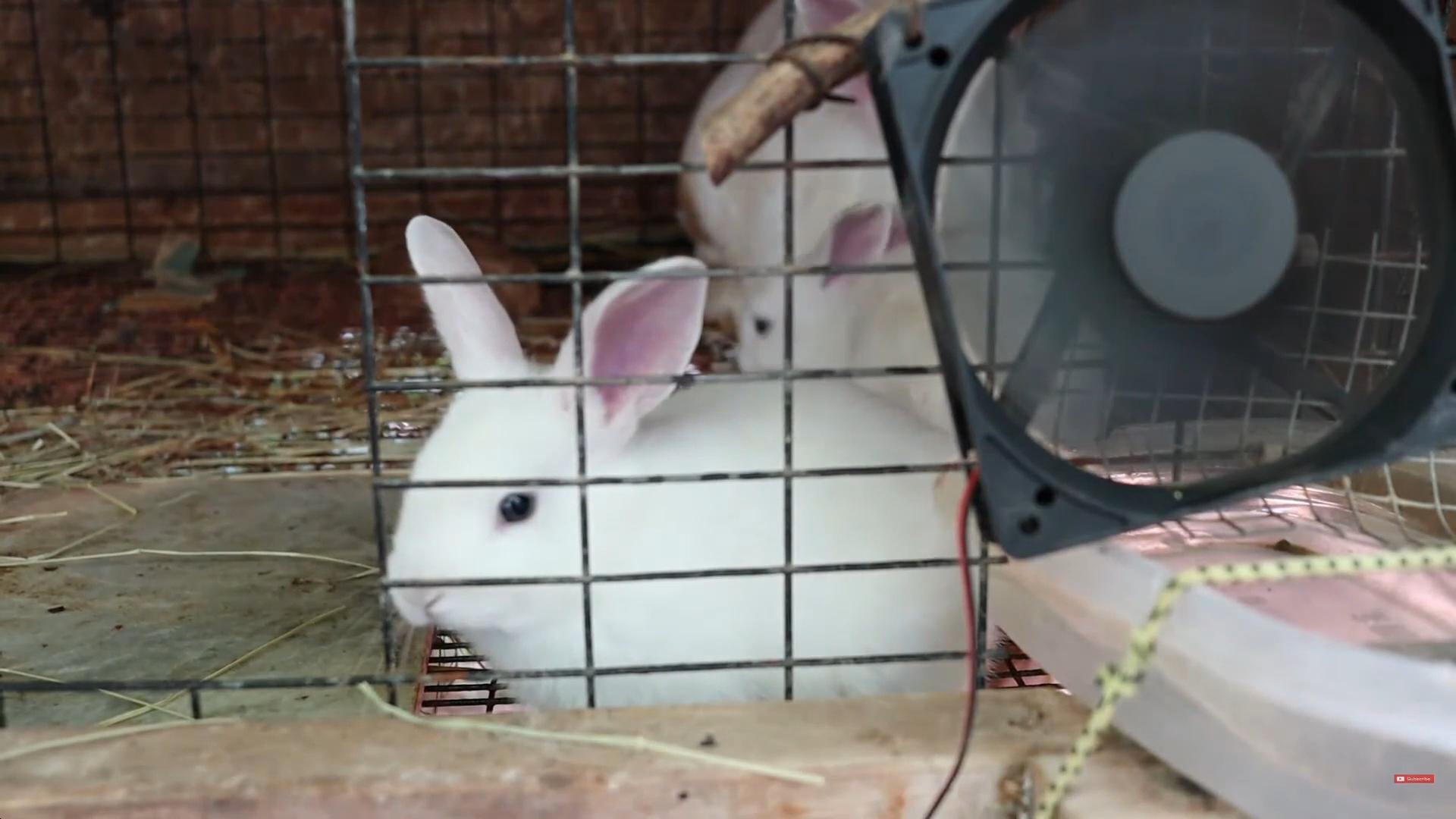
One of the simplest upgrades we’ve made is installing 12-volt computer fans powered by small solar panels. They begin moving air as soon as the sun comes up—right when rabbits need it most—without increasing your electric bill. Even a gentle breeze across a rabbit can make a noticeable difference in comfort during hot weather.
I’ve included a wiring diagram below for anyone interested in building an inexpensive solar-powered cooling system for their own rabbitry.
Don’t wait until a rabbit is in distress. Early intervention and good airflow are two of the best ways to prevent serious heat-related problems.

4. Frozen Water Bottles & Marble Tile Work Wonders
One of the easiest cooling methods is placing frozen bottles inside the cage pair that with a marble tile.
- 1-liter bottles usually stay cold for around five hours.
- 2-liter bottles remain cold even longer.
- Rotate bottles throughout the day during heat waves.
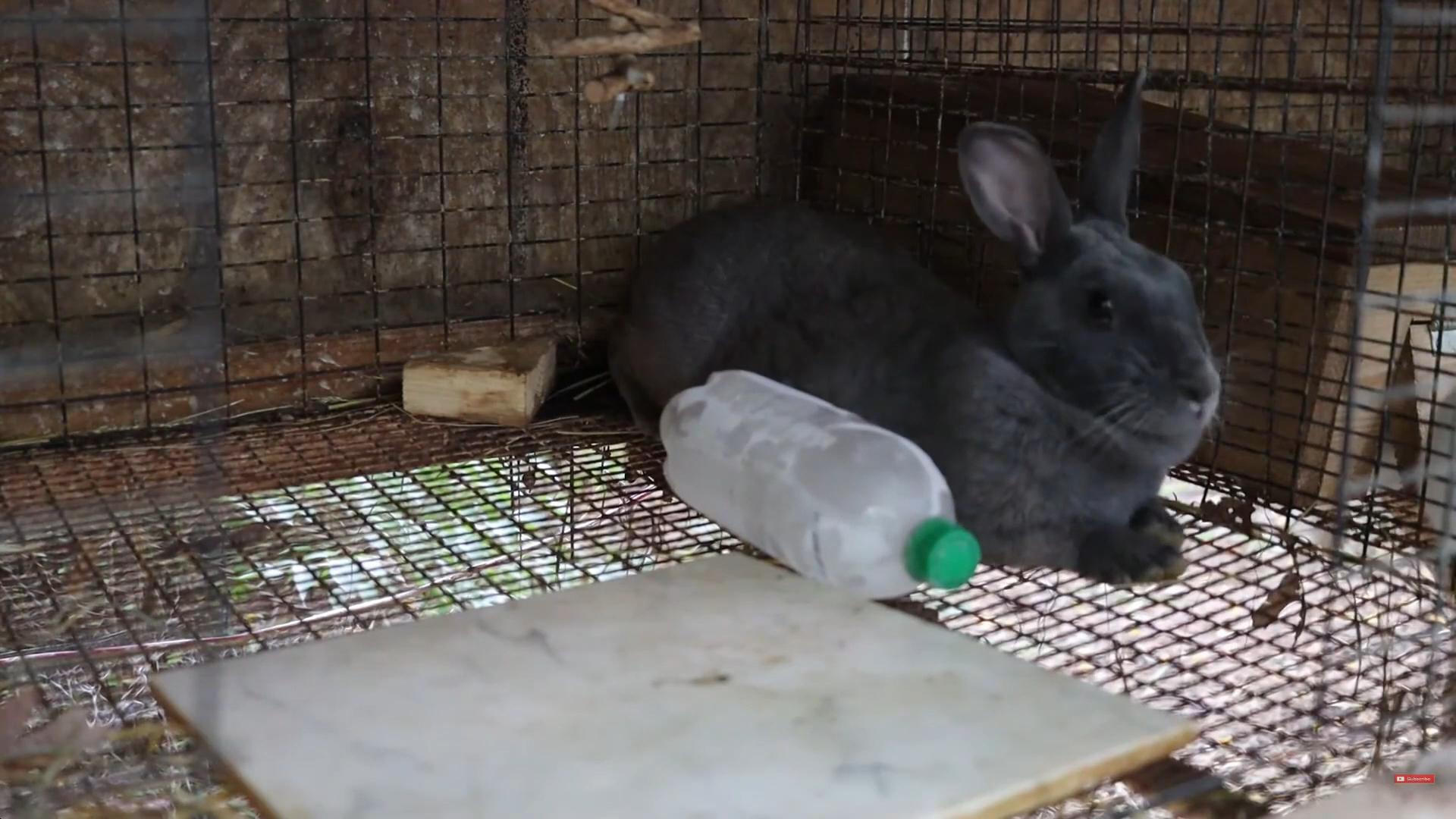
Many rabbits will naturally choose to lie on a cool tile and lean against a frozen water bottle to help regulate their body temperature.
At our rabbitry, frozen bottles are one of our first responses whenever temperatures climb.
5. Heat Can Affect Fertility
Heat doesn’t just make rabbits uncomfortable—it can also affect their reproductive performance.
During extended periods of hot weather, you may notice:
- Bucks becoming temporarily less fertile
- Smaller litters
- Does failing to conceive
- Lower overall breeding success
Years ago, we rescued several California rabbits that had been housed in direct sunlight. One of the bucks required several months before his fertility returned.
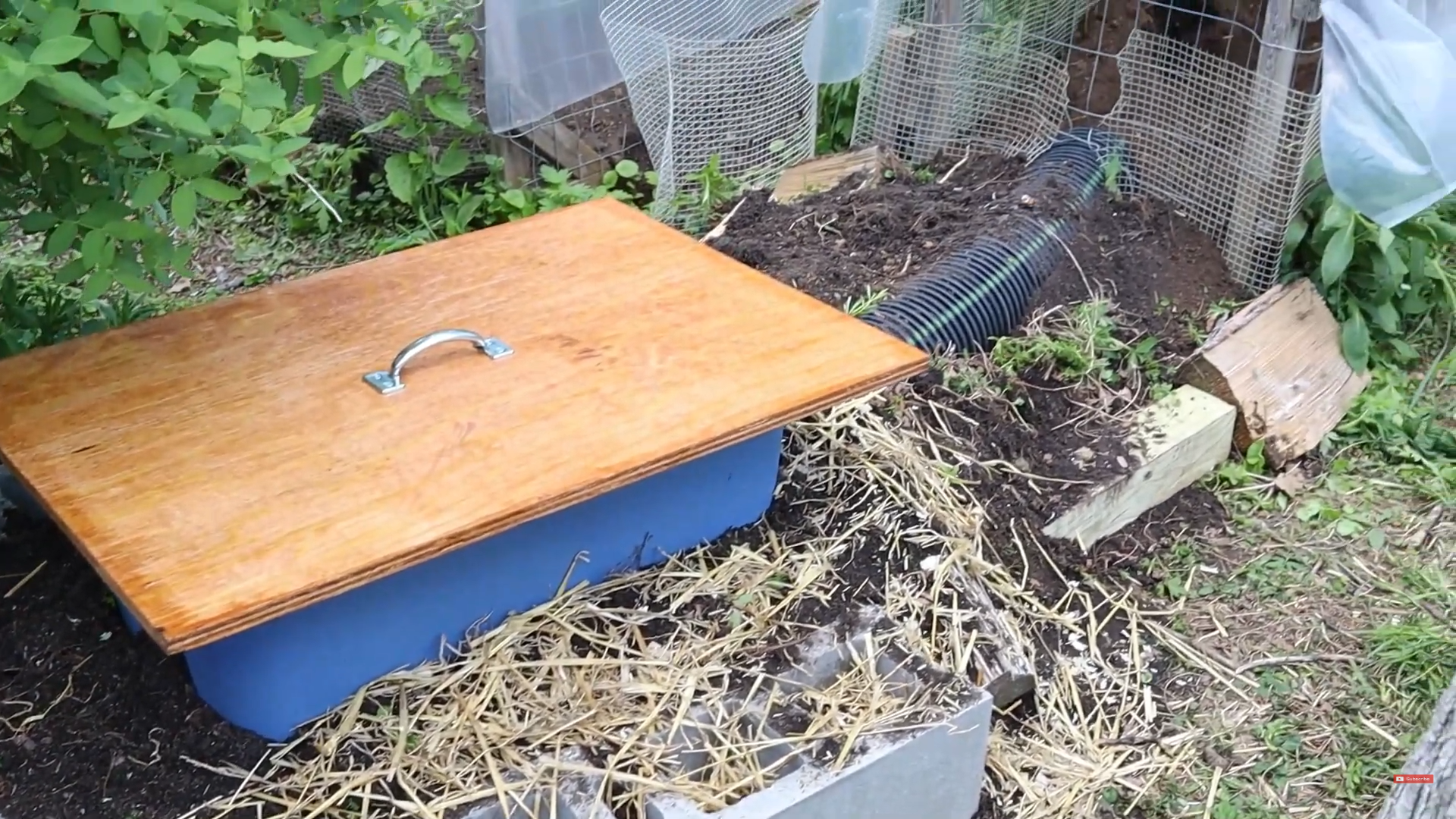
One of the best investments we’ve made for our breeding program is the use of cooling totes. They give rabbits a place to escape the heat when temperatures climb. Because the totes are surrounded by soil, they stay naturally cool—much like a basement—providing a comfortable refuge from the summer heat.
By giving rabbits access to a cooler environment, you can reduce heat stress, help maintain fertility, and improve breeding consistency throughout the hottest months of the year. Sometimes a simple place to cool off can make all the difference.
6. Wire Nest Boxes Help Kits Stay Cooler
We use wire-bottom nesting boxes throughout the year.
During winter we simply add: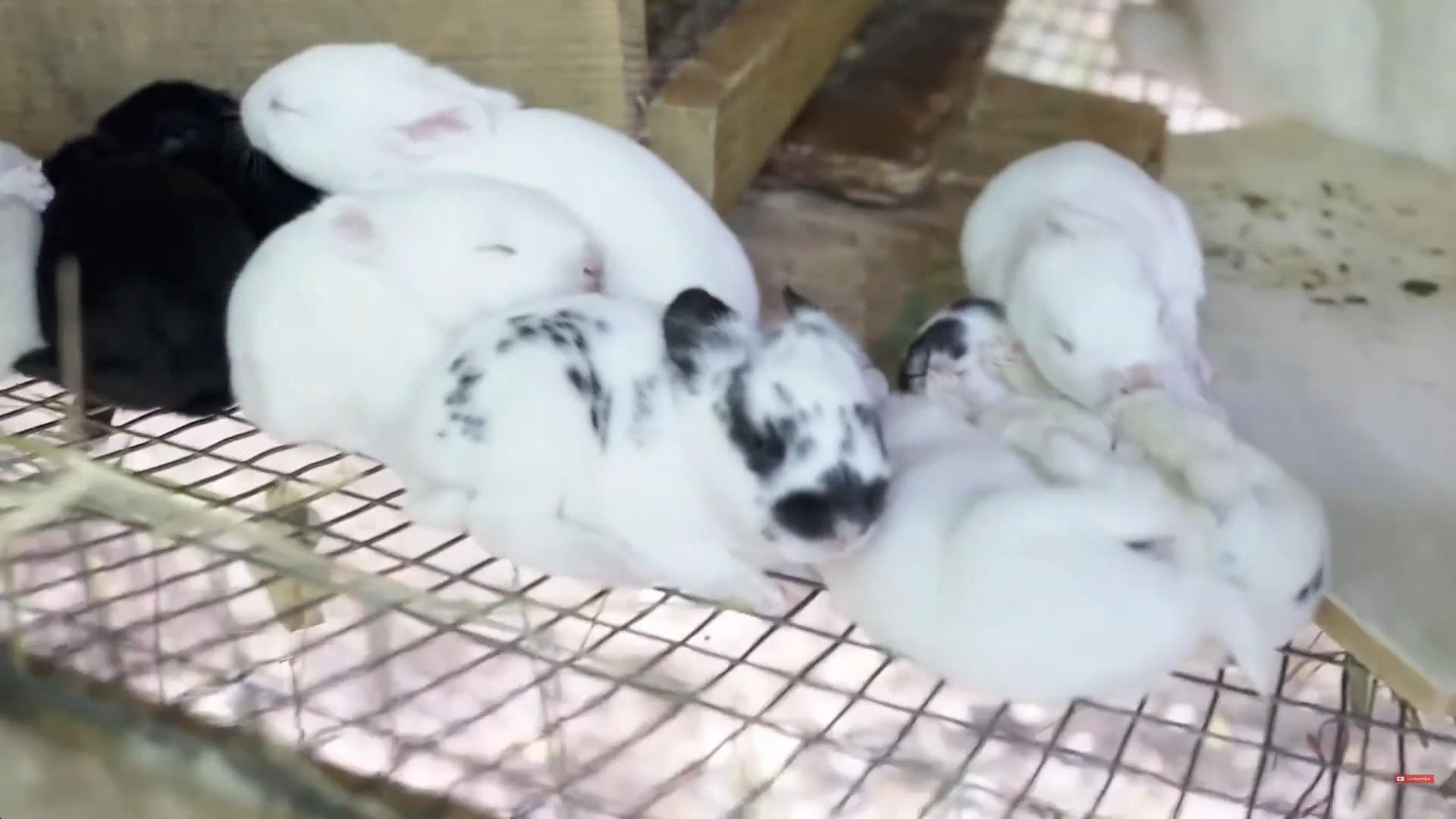
- Paper
- Wood shavings
During summer we leave the wire exposed to maximize airflow beneath the litter.
Combined with our kindling tote system, this helps newborn kits stay much cooler while still remaining secure.
Even young kits that haven’t opened their eyes will often spread out across the nest to take advantage of the extra ventilation.
7. Some Small Litters Are Normal During Summer
Even with excellent management, heat can reduce litter size.
One of our does recently produced only five kits after several weeks of 90°F weather.
That’s simply part of breeding during the hottest months.
The important thing is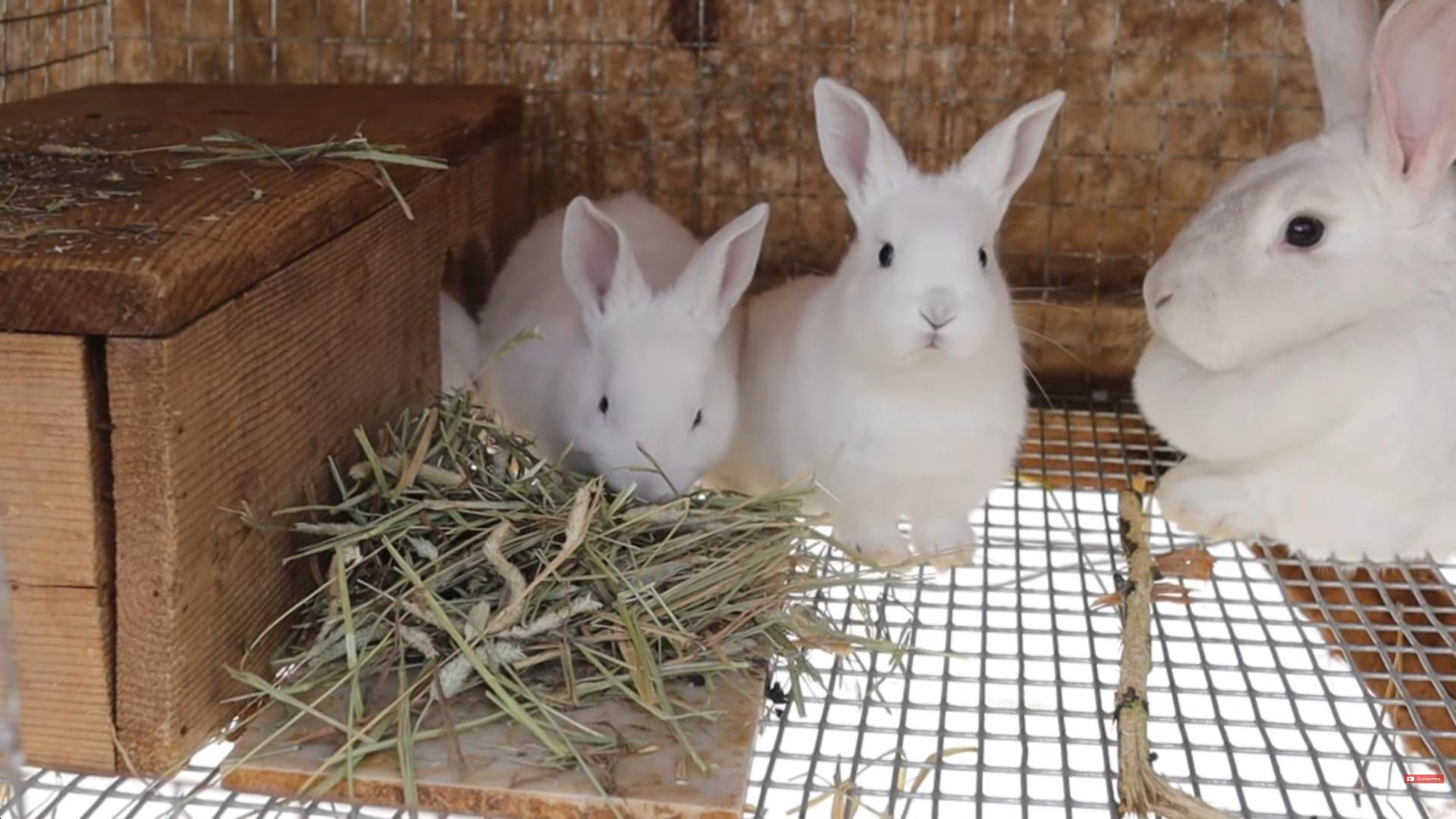 maintaining healthy rabbits so litter sizes rebound when temperatures moderate.
Don’t become discouraged by an occasional small litter if your rabbits otherwise appear healthy.
8. Choose Rabbits Adapted to Your Climate
Whenever possible, purchase rabbits that have already been raised in a climate similar to yours.
Moving rabbits from cool northern states directly into extremely hot southern climates—or vice versa—creates additional stress.
Some breeds also tolerate heat better than others, including:
- TAMUK
- New Zealand White
- Californian
- Champagne d’Argent
- Satin
- Florida White
Buying locally often means your breeding stock is already acclimated to your weather conditions.
9. Use Misters Carefully
Ultra-fine misting systems can
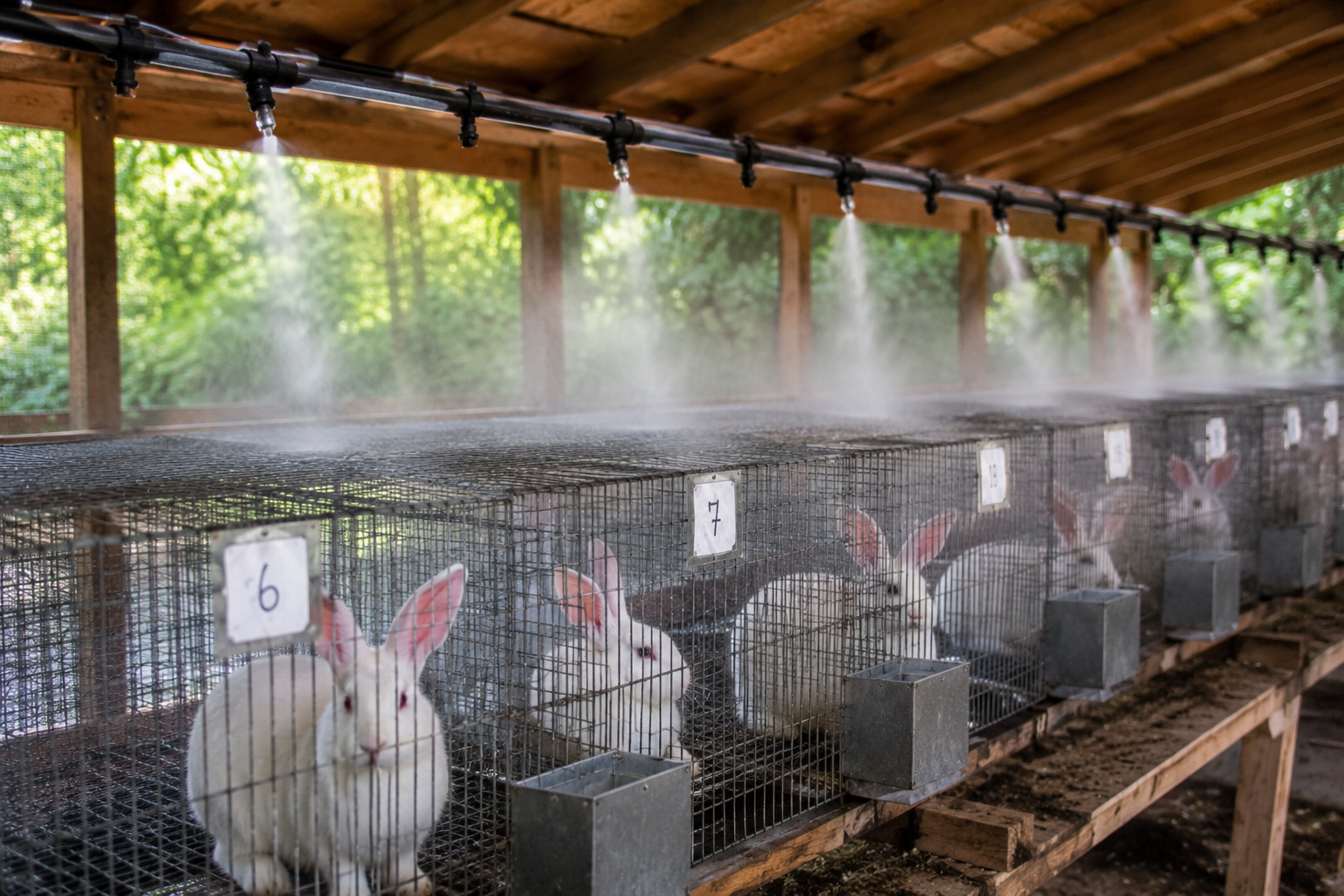
lower surrounding temperatures without soaking your rabbits.
If you use misters:
- Keep water away from feeders.
- Prevent pellets from becoming wet and moldy.
- Use a calcium filter if you have hard water to prevent clogged nozzles.
A properly installed misting system can noticeably reduce temperatures around your rabbitry during the hottest afternoons.
10. Know What To Do During Heat Stroke
If a rabbit becomes dangerously overheated:
- Move it into shade
 immediately.
 - Wipe the inside of the ears with a cool, damp cloth.
- Wrap the rabbit in a cool wet towel.
- Place a fan nearby to increase evaporation.
- In severe cases, immerse the rabbit’s body (never the head) in cool water while gently massaging the fur so water reaches the skin.
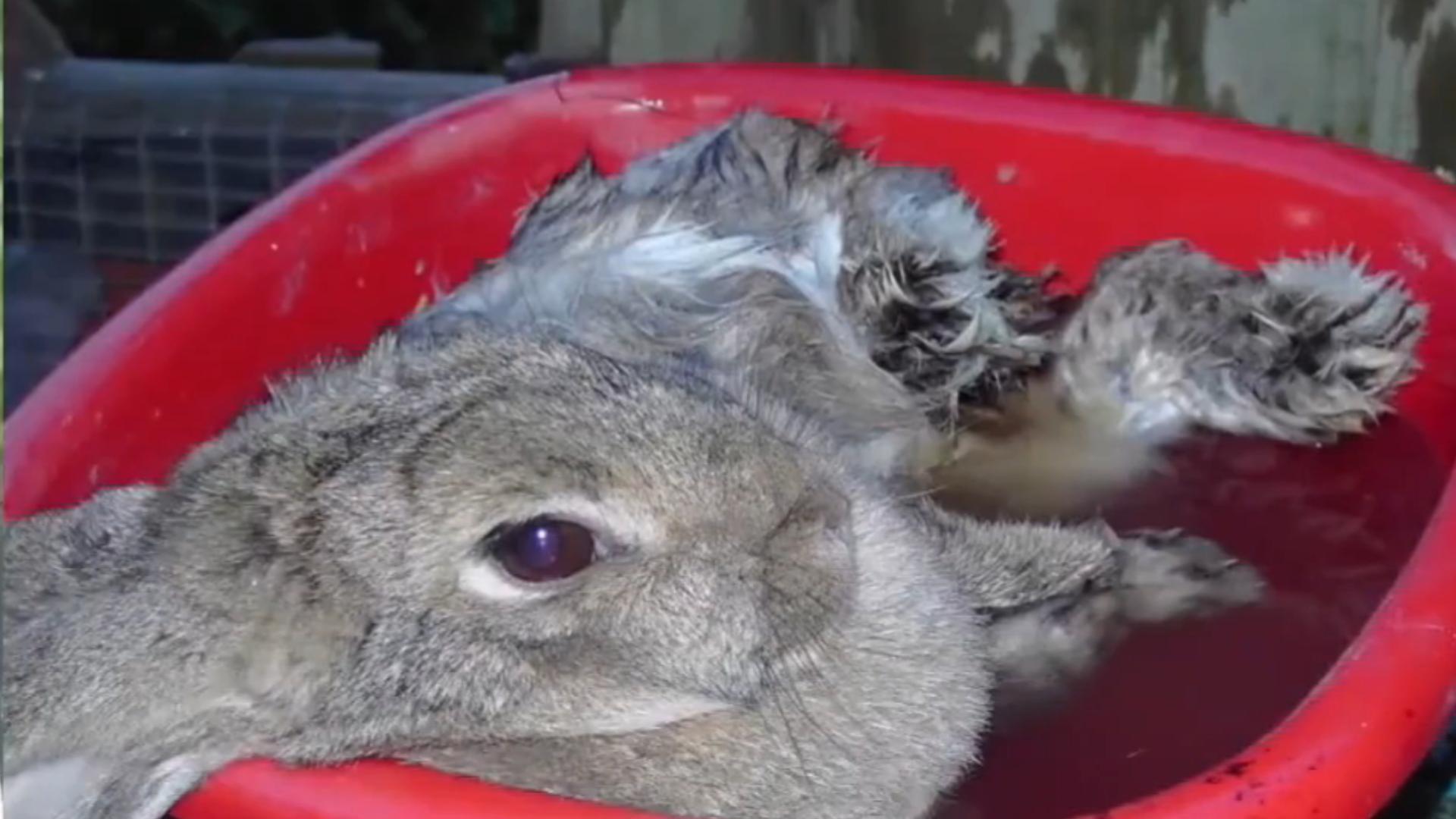
Never submerge the rabbit’s head or allow water into the nose, mouth, or ears.
Continue cooling until the rabbit begins recovering, and monitor it closely afterward.
Final Thoughts
Summer management is about preparation, not panic.
A well-designed rabbitry with good ventilation, full-time shade, frozen bottles, proper nest boxes, and careful observation will dramatically reduce the risk of heat stress.

so make it a habit to walk your rabbitry several times a day during heat waves and check each animal individually.
No two rabbits respond exactly the same to hot weather,
With the right setup, it’s entirely possible to raise productive breeding stock and healthy litters—even through the hottest weeks of summer.
Stay cool, stay observant, and your rabbits will thank you.
— Bobby
The Rabbitry Center