
When Should You Wean Baby Rabbits? Early vs. Late Weaning Explained
When is the right time to wean baby rabbits? The answer depends on the kits, the doe, and the goals of your rabbitry.
If you raise rabbits long enough, eventually you’re going to hear the question: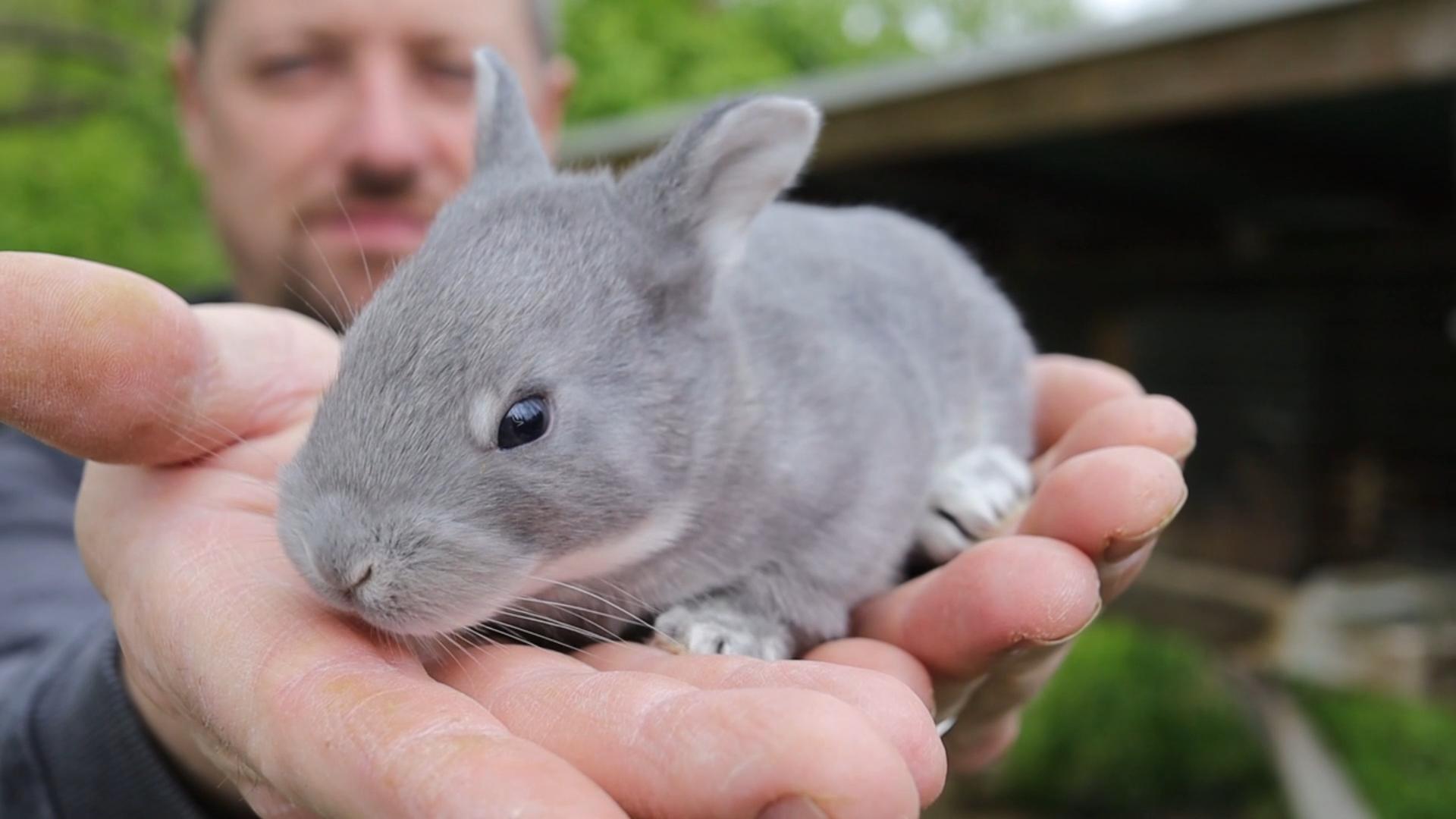
“When should I wean my baby rabbits?”
Ask ten rabbit breeders and you may get ten different answers.
Some commercial operations wean rabbits very early. Other breeders leave kits with their mother until eight weeks old. Here at The Rabbitry Center, I prefer something in between, with an emphasis on gradual weaning and keeping stress as low as possible for both the kits and the mama rabbit.
There isn’t one magic number that works for every rabbitry. Your breeding schedule, litter size, condition of the doe, growth of the kits, housing and goals all matter.
But there is something even more important than picking an exact day:
How you wean the litter matters.
Baby Rabbits Actually Begin Weaning Themselves
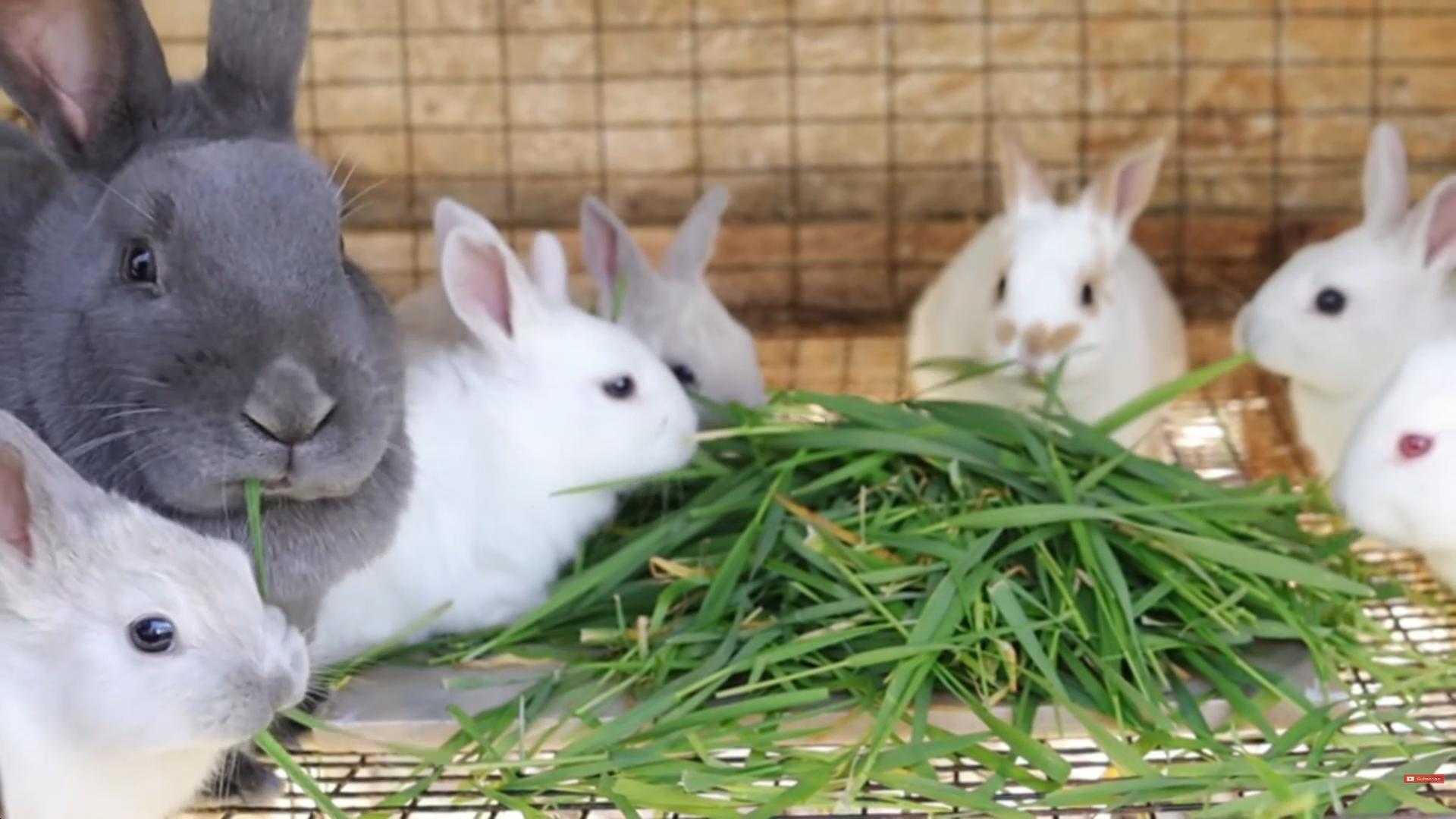
Long before we physically separate a litter, the kits are already beginning the natural weaning process by eating the same foods as mama.
Weaning isn’t normally an event that happens overnight.
As kits get older, you’ll notice them leaving the nest, exploring the cage and becoming increasingly interested in what mama is eating.
They begin:
- Nibbling pellets
- Eating hay
- Drinking water
- Exploring greens and other foods
- Nursing less frequently
This creates a natural transition from being primarily dependent on mother’s milk to obtaining their nutrition from solid food and water.
By roughly four weeks, that transition is well underway. During the following weeks, milk becomes a smaller part of their diet as solid feed becomes increasingly important.
That’s why I don’t look at weaning as flipping a switch.
I look at it as a transition.
What Happens When Rabbits Are Weaned Too Early?
Rabbits can be weaned surprisingly young under carefully managed conditions.
Studies have examined weaning at 21, 28 and 35 days, so 21-day weaning isn’t unheard of, particularly in intensive commercial production.
But just because something can be done doesn’t necessarily mean it is the best choice for a backyard rabbitry.
Research comparing rabbits weaned at 21, 28 and 35 days has found differences in growth following very early weaning.
That tells us something important:
A three-week-old rabbit may be capable of surviving without mama, but its digestive system and body are still going through an enormous transition.
Weaning Is a Stressful Transition
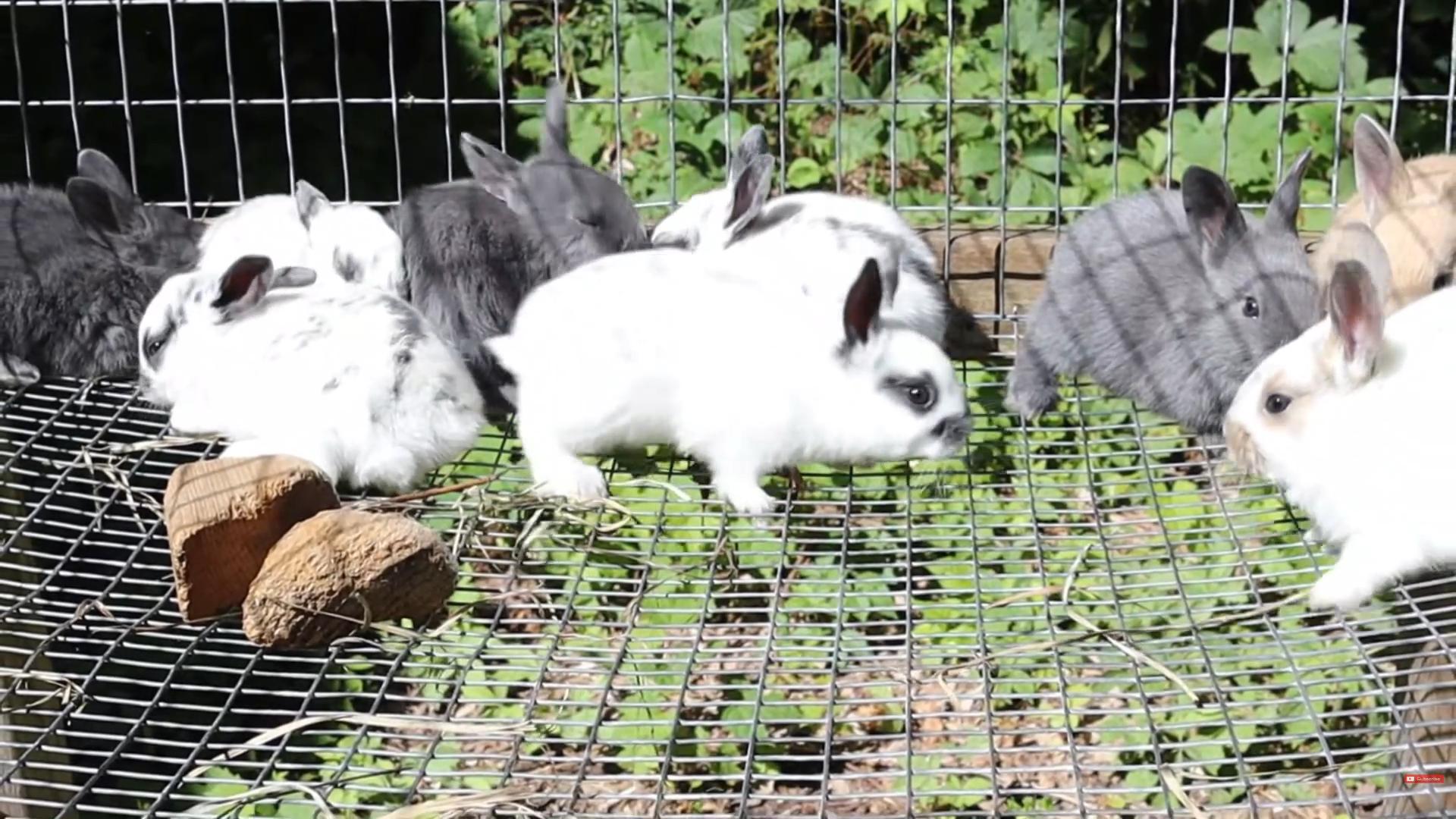
Keeping littermates together can help avoid adding unnecessary isolation to an already significant transition.
Think about everything that can change at once.
A kit can suddenly lose access to its mother and milk, be separated from its littermates, move into a different cage, encounter different feeders and waterers, and become completely dependent on solid food.
Meanwhile, its digestive system is still developing.
Weaning is recognized as a stressful period because the intestinal environment is changing at the same time that the rabbit is transitioning toward a solid-food diet.
That’s why I don’t like stacking unnecessary stresses on top of one another.
Weaning day shouldn’t also become change-everything day.
Keep the feed familiar. Keep fresh water available. Provide quality hay. Keep cages, feeders and waterers clean. Avoid suddenly dumping large amounts of unfamiliar greens or feeds into their diet.
The goal is to make the transition as uneventful as possible.
Why I Prefer Gradual Weaning
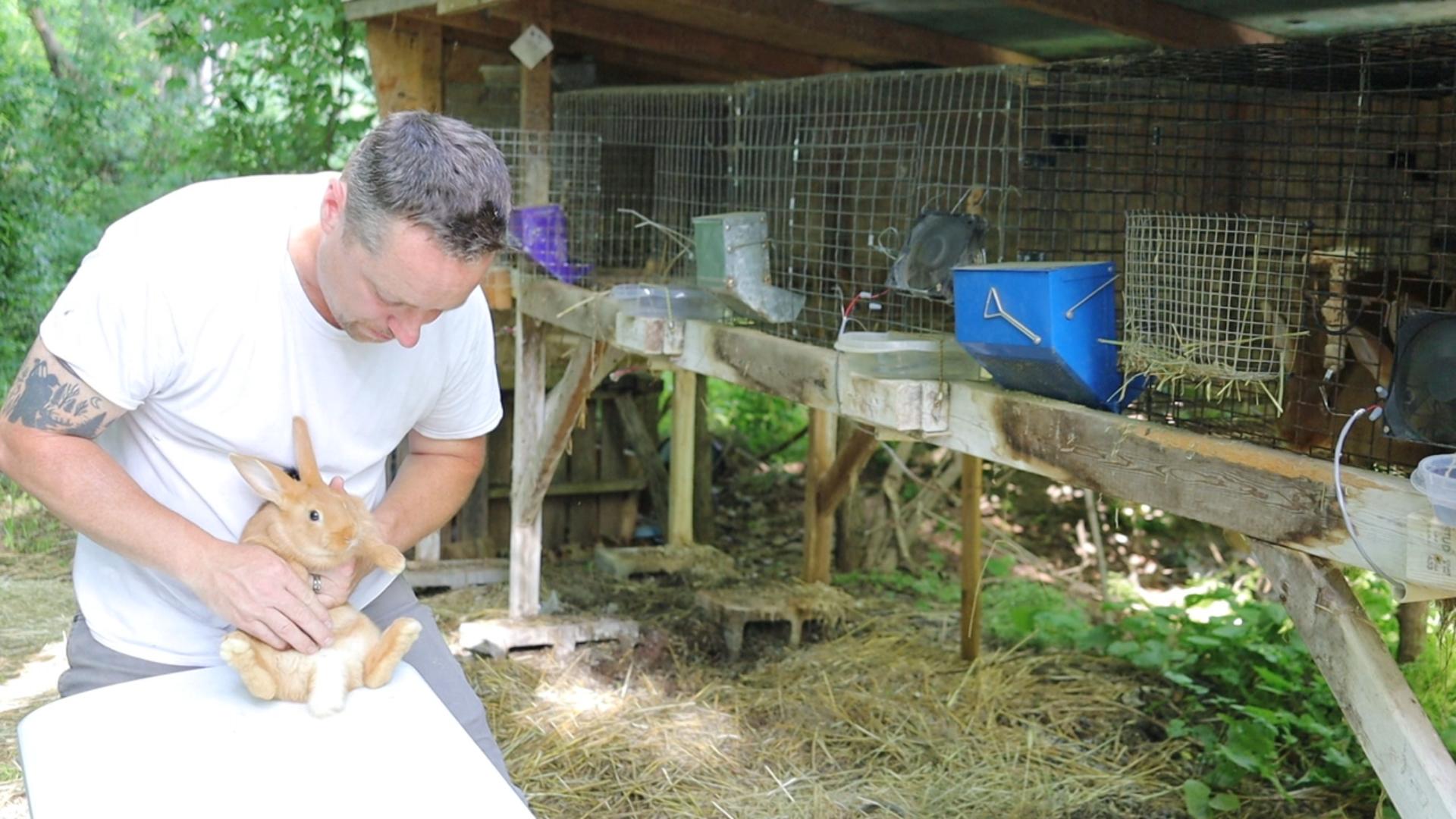
I prefer to evaluate the individual rabbits instead of removing an entire litter simply because the calendar reached a certain day.
Instead of removing an entire litter from mama in one day, I prefer to gradually reduce the litter.
For example, if I have a healthy six-week-old litter, I might remove two of the biggest, strongest kits first.
A couple days later, I’ll remove another couple.
Then another.
Eventually mama may only have one or two smaller kits remaining with her.
This accomplishes two things.
First, the smaller or more timid kits get additional time with mama.
Second, mama isn’t suddenly going from nursing an entire litter to nursing nothing.
Start With the Biggest Kits
When deciding which rabbits to move first, I normally look for rabbits that are:
- Larger
- Active
- Eating well
- Drinking independently
- Eating hay
- Comfortable away from mama
The smaller kits can stay behind for a little more time.
Don’t make the calendar more important than the rabbit standing in front of you.
Don’t Wean a Young Rabbit Alone If You Don’t Have To
If I’m moving younger rabbits away from mama, I prefer moving them with a littermate rather than taking one young rabbit and putting it alone in another cage.
They’ve spent their entire lives surrounded by mama and siblings.
Then suddenly they’re alone.
Keeping littermates together during that first transition gives them companionship while they’re adapting to their new environment.
21, 28, 35, 42, 49 or 56 Days: What’s the Difference?
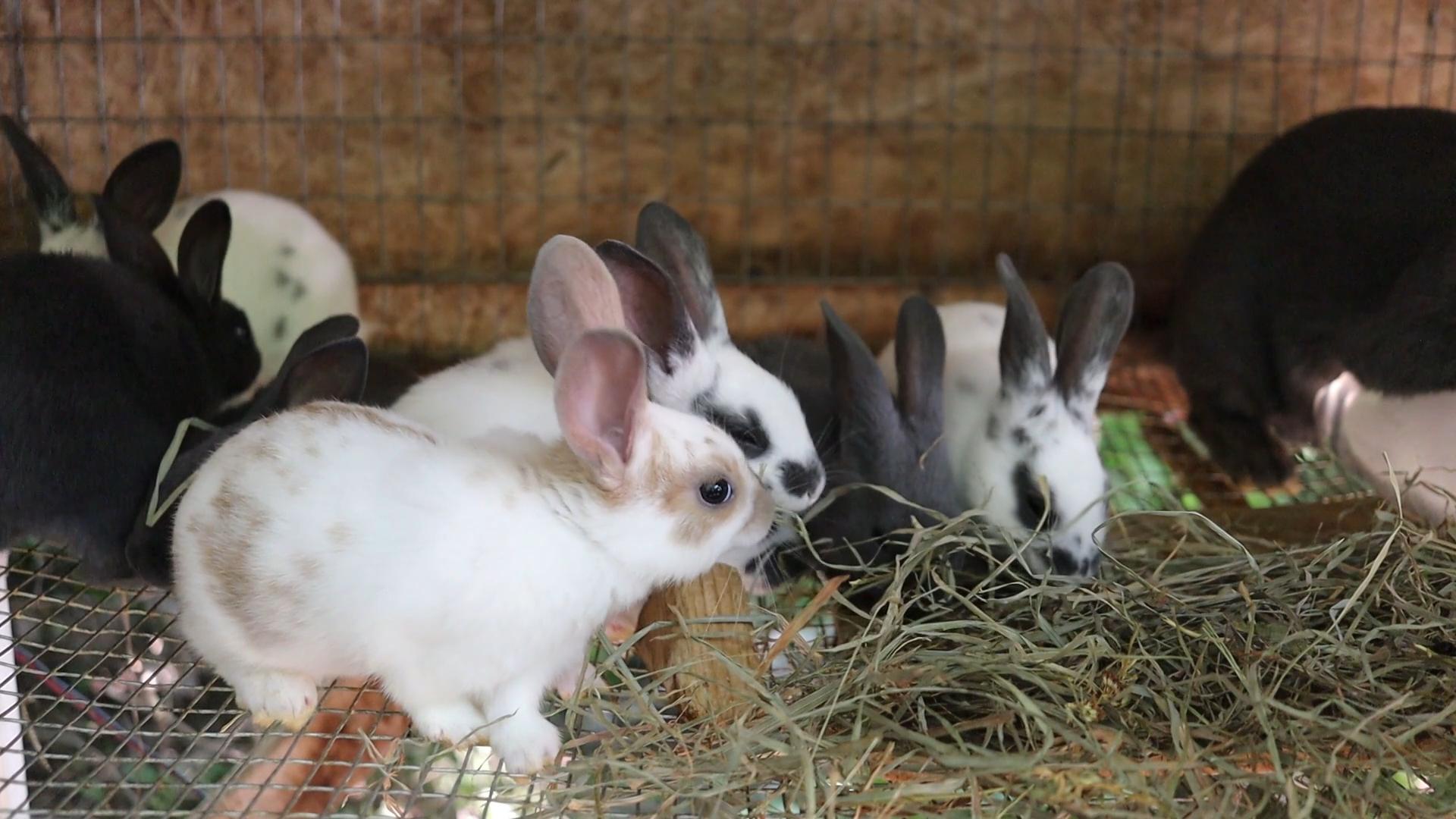
There is a big developmental difference between a three-week-old kit and a six- or eight-week-old rabbit.
| Weaning Age | What It Means in the Rabbitry |
|---|---|
| 21 days / 3 weeks | Very early weaning. Used and studied in intensive production systems, but requires excellent nutrition and management. |
| 28 days / 4 weeks | Early weaning. Kits should be eating solid food and drinking independently. This is still a sensitive digestive period. |
| 35 days / 5 weeks | A moderate weaning age used in many production systems. Kits have another important week of digestive development behind them. |
| 42 days / 6 weeks | My preferred neighborhood for beginning gradual weaning. Healthy kits are normally eating and drinking well independently. |
| 49 days / 7 weeks | Conservative weaning that gives smaller or slower-growing kits additional time with mama. |
| 56 days / 8 weeks | A later weaning schedule. It can be appropriate in some systems, although healthy kits are normally consuming substantial solid food well before this age. |
The important point is that earlier isn’t automatically better and later isn’t automatically better.
We’re trying to find the point where the kits are physically prepared to leave mama without unnecessarily extending the demands placed on the doe.
How Weaning Age Can Affect Litters Per Year
There’s another reason people talk so much about early weaning:
Production.
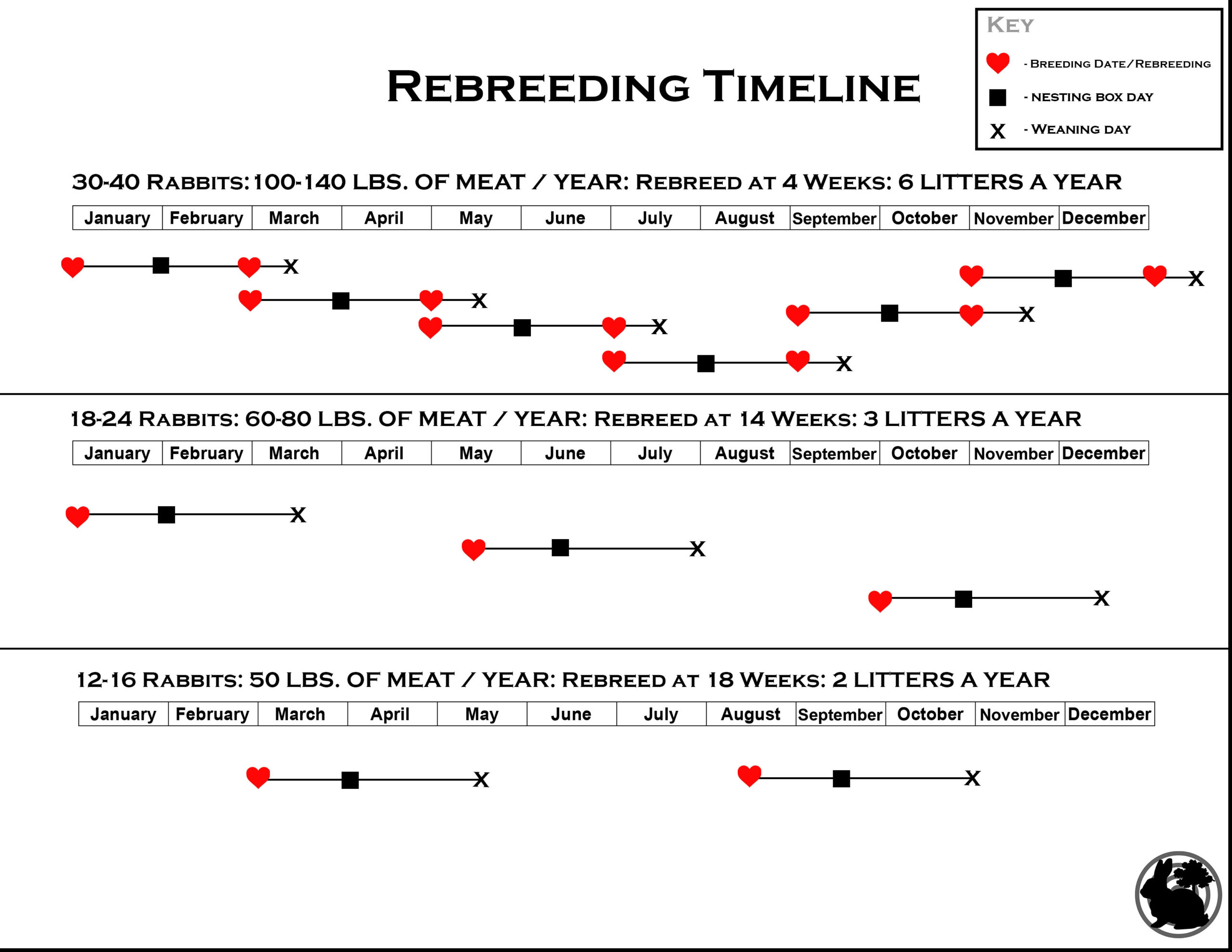
The sooner one litter is weaned, the sooner a breeder who waits until weaning to rebreed can begin another breeding cycle.
If we use an approximately 31-day pregnancy and assume that the doe isn’t rebred until her current litter has been weaned, here’s what the math looks like:
| Weaning Age | Approx. Wean-to-Wean Cycle | Theoretical Litters Per Year |
| 21 days | 52 days | 7.0 |
| 28 days | 59 days | 6.2 |
| 35 days | 66 days | 5.5 |
| 42 days | 73 days | 5.0 |
| 49 days | 80 days | 4.6 |
| 56 days | 87 days | 4.2 |
These are mathematical examples—not breeding recommendations.
And there’s another important distinction.
A doe can become pregnant while she’s still nursing, so commercial breeding schedules aren’t necessarily based on waiting for weaning before rebreeding.
That’s how intensive operations can produce considerably more litters.
But just because you can doesn’t mean that’s what you should do in your rabbitry.
More Litters Doesn’t Always Mean More Production
Seven litters sounds better than five.
But is it?
What if producing seven litters leaves the doe struggling to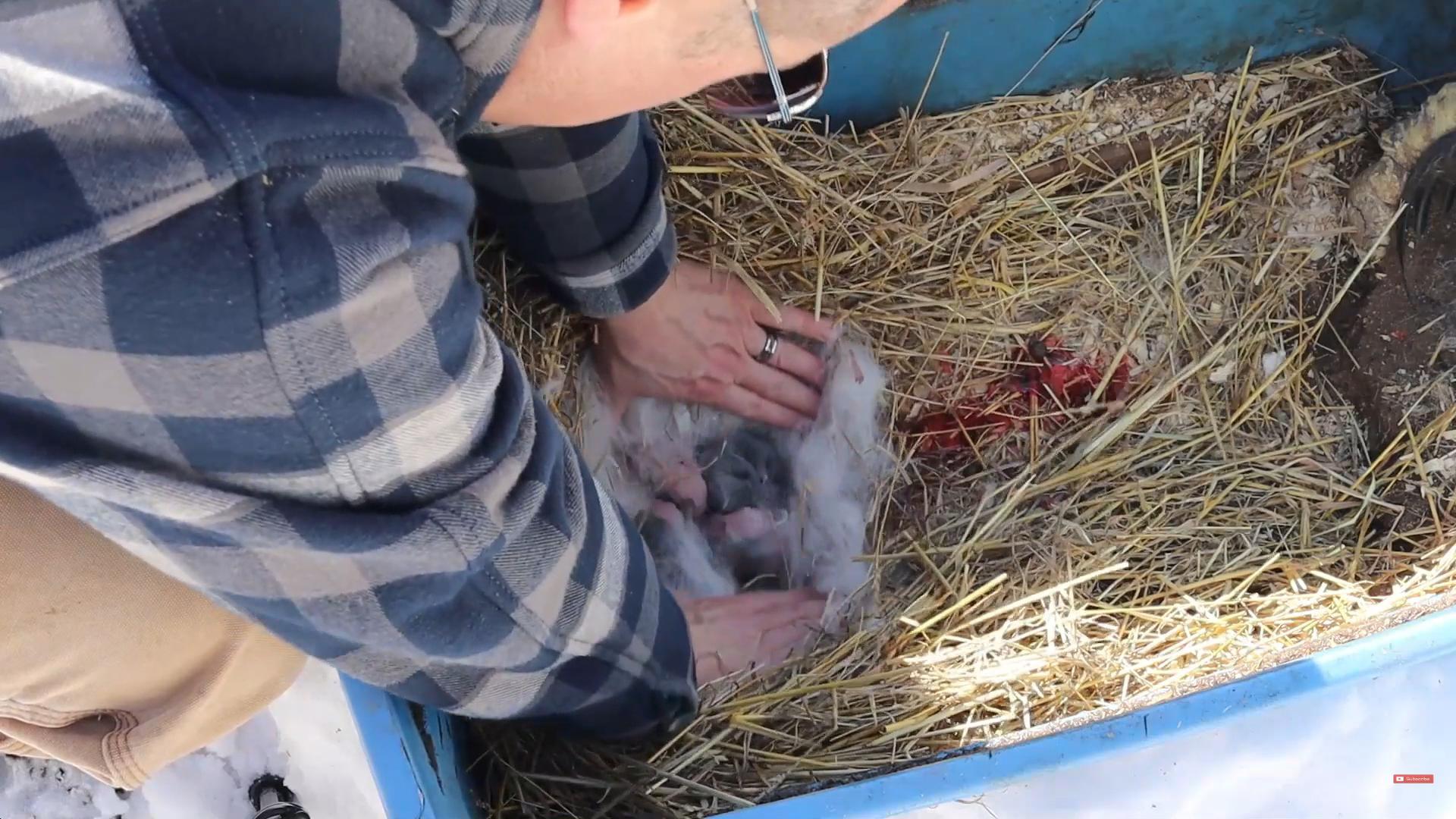 maintain body condition?
What if earlier-weaned kits grow more slowly or require additional management?
What if you’re producing rabbits faster than you have cages, customers or freezer space available?
Production isn’t simply how many rabbits are born. Production is how many healthy rabbits your system can successfully raise.
Your breeding schedule should match your:
- Feed supply
- Cage space
- Available time
- Customers
- Processing plans
- Grow-out space
- Doe’s body condition
- Overall goals
Here at The Rabbitry Center, we’re not trying to squeeze every possible litter out of every doe.
We’re trying to build a healthy, sustainable rabbitry.
Weaning Too Late Has Trade-Offs Too
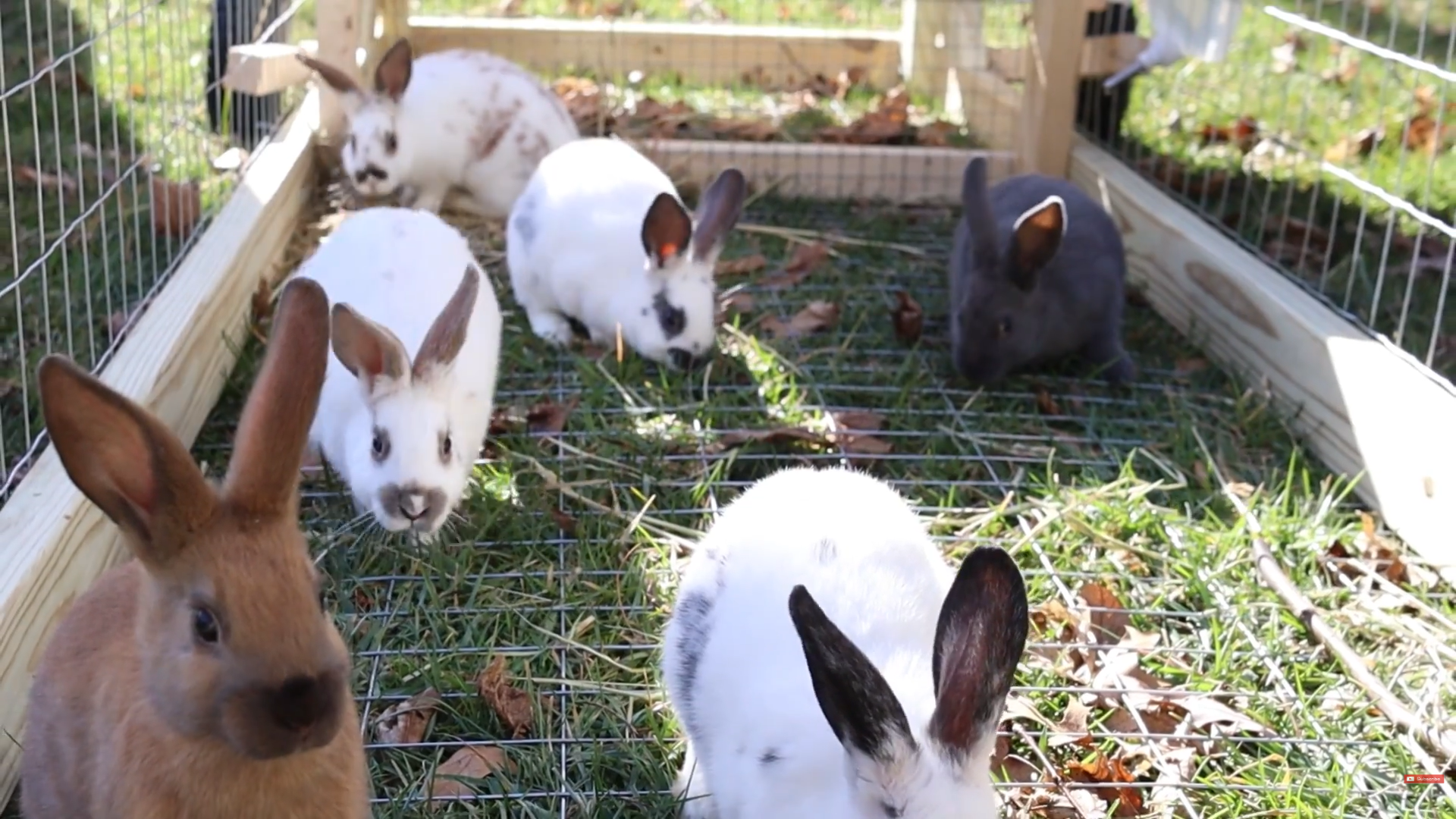 As kits grow, they consume increasingly more solid food while the doe continues carrying the nutritional demands of lactation.
If early weaning has disadvantages, why not simply leave every litter with mama indefinitely?
Because keeping a large litter together also has trade-offs.
Lactation requires considerable energy from a doe.
Milk production rises rapidly after kindling and then declines as the kits mature and increase their intake of solid feed.
Meanwhile, those little kits aren’t staying little.
A litter of eight-week-old rabbits occupies considerably more room than the same litter did at four weeks.
They’re eating more.
They’re drinking more.
They’re producing more manure.
They’re competing for space around the feeder.
And mama may increasingly want some distance from them.
At some point, keeping everyone together isn’t necessarily providing an additional benefit.
What Happens to Mama’s Milk When the Kits Leave?
This is another reason I prefer gradual weaning.
Imagine a doe nursing eight kits and then removing all eight in one afternoon.
Her milk production doesn’t instantly shut off.
When I remove a couple kits, wait, and then remove another couple, I’m gradually reducing the demand for milk.
It gives mama’s body an opportunity to transition out of lactation instead of going from nursing a large litter to nursing nothing.
That doesn’t mean abruptly removing a litter automatically causes mastitis.
Mastitis is inflammation and infection of the mammary gland and can become a serious health problem in rabbits.
During weaning, inspect your doe and pay attention to her mammary glands.
Watch for:
- Heat
- Redness
- Swelling
- Hard areas
- Pain or sensitivity
- Abnormal-looking mammary tissue
- Reduced appetite
- Lethargy
- Other signs of illness
If you suspect mastitis or another illness, contact a rabbit-experienced veterinarian promptly.
Feeding Baby Rabbits During Weaning
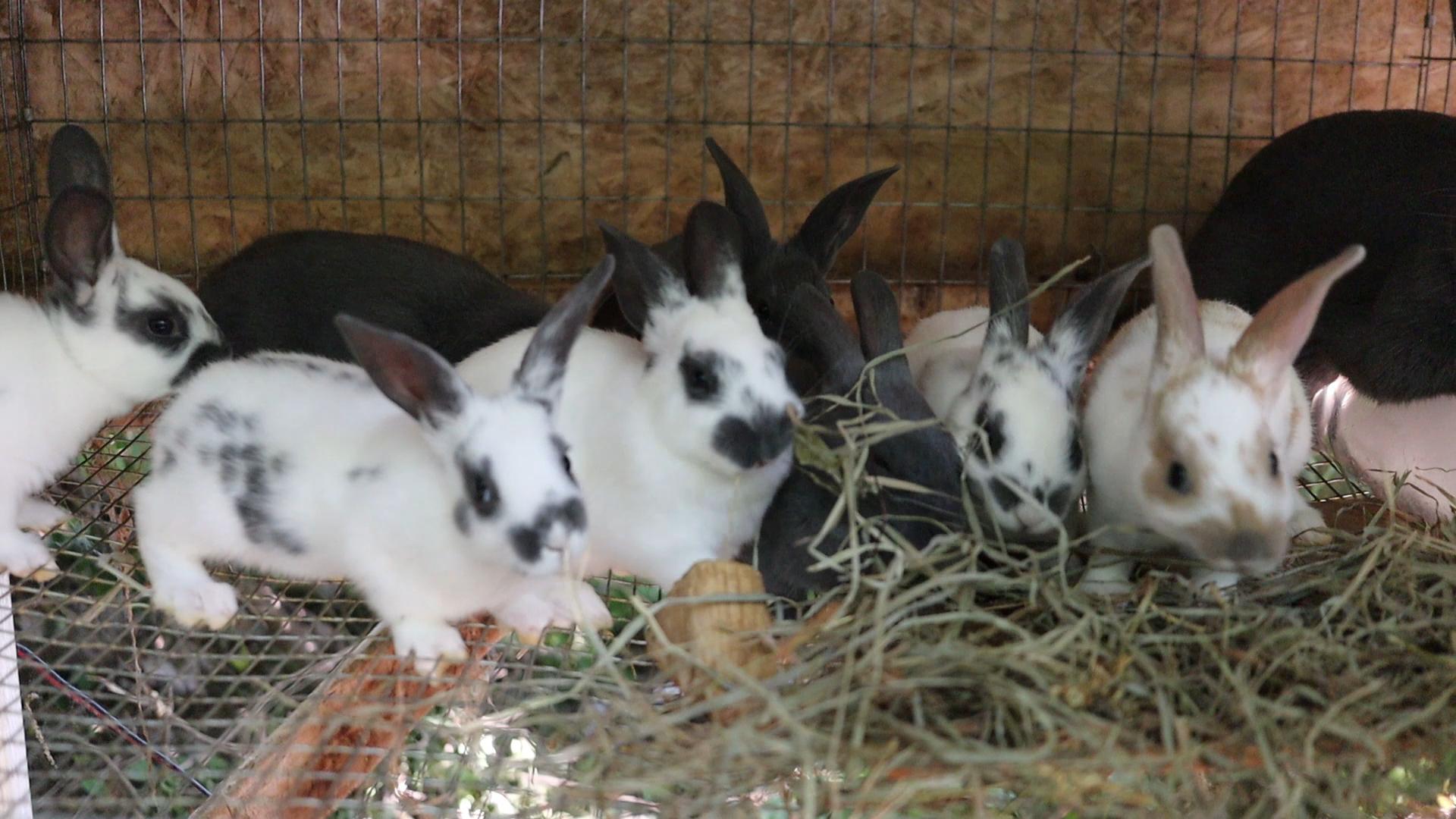
Don’t combine weaning with a sudden, dramatic diet change. Keep familiar foods available while the kits adjust.
This is not the time to completely reinvent their diet.
If the babies have been eating mama’s pellets and hay and drinking the same water for weeks, continue providing those familiar foods during the transition.
I want to see a kit:
Eating. Drinking. Producing normal manure. Staying active.
If you’re introducing greens or browse, introduce unfamiliar foods gradually rather than suddenly providing a huge amount of something they’ve never eaten.
The developing rabbit digestive system doesn’t appreciate sudden dietary changes.
A little today, a little more later, and gradually build from there.
Keep Everything Clean
Sanitation becomes especially important around weaning.
Keep:
- Feeders clean
- Water containers clean
- Cages clean
- Feed fresh
- Hay dry
- Manure from accumulating excessively
Weaning already creates physiological and environmental changes.
There’s no reason to pile poor sanitation onto that transition.
Watch the Rabbit, Not Just the Calendar

The calendar gives us an age. The rabbit tells us how well it’s actually developing.
A calendar tells me a litter is six weeks old.
The rabbits tell me whether they’re actually ready.
Before moving a kit, I’m looking for a healthy rabbit that is active, eating pellets, eating hay, drinking water and maintaining good body condition.
If one kit is substantially smaller than its siblings, I don’t necessarily have to remove it just because its brothers and sisters are ready.
The big ones can leave first.
Give the smaller one a little extra time.
That’s one of the biggest advantages a backyard rabbitry has over a high-volume production system:
We can manage individual rabbits.
My Preferred Method for Weaning Rabbits
 For most healthy backyard litters, I like the six-week range as a practical place to begin evaluating them for weaning.
Rather than pulling everybody at once:
Around Six Weeks
Evaluate the entire litter.
First Removal
Take a couple of the biggest, strongest kits that are eating and drinking independently.
A Few Days Later
Remove another couple of healthy kits.
Continue Gradually
Allow smaller kits additional time if needed.
Keep Littermates Together
When practical, don’t put a newly weaned young rabbit into a cage completely alone.
Keep the Diet Familiar
Continue quality feed, hay and clean water.
Monitor Mama
Watch her body condition and mammary glands as lactation winds down.
That gives both sides of the equation time to adjust.
So, What Is the Best Age to Wean Rabbits?
If you’re running an intensive commercial rabbit operation, your answer may be different from mine.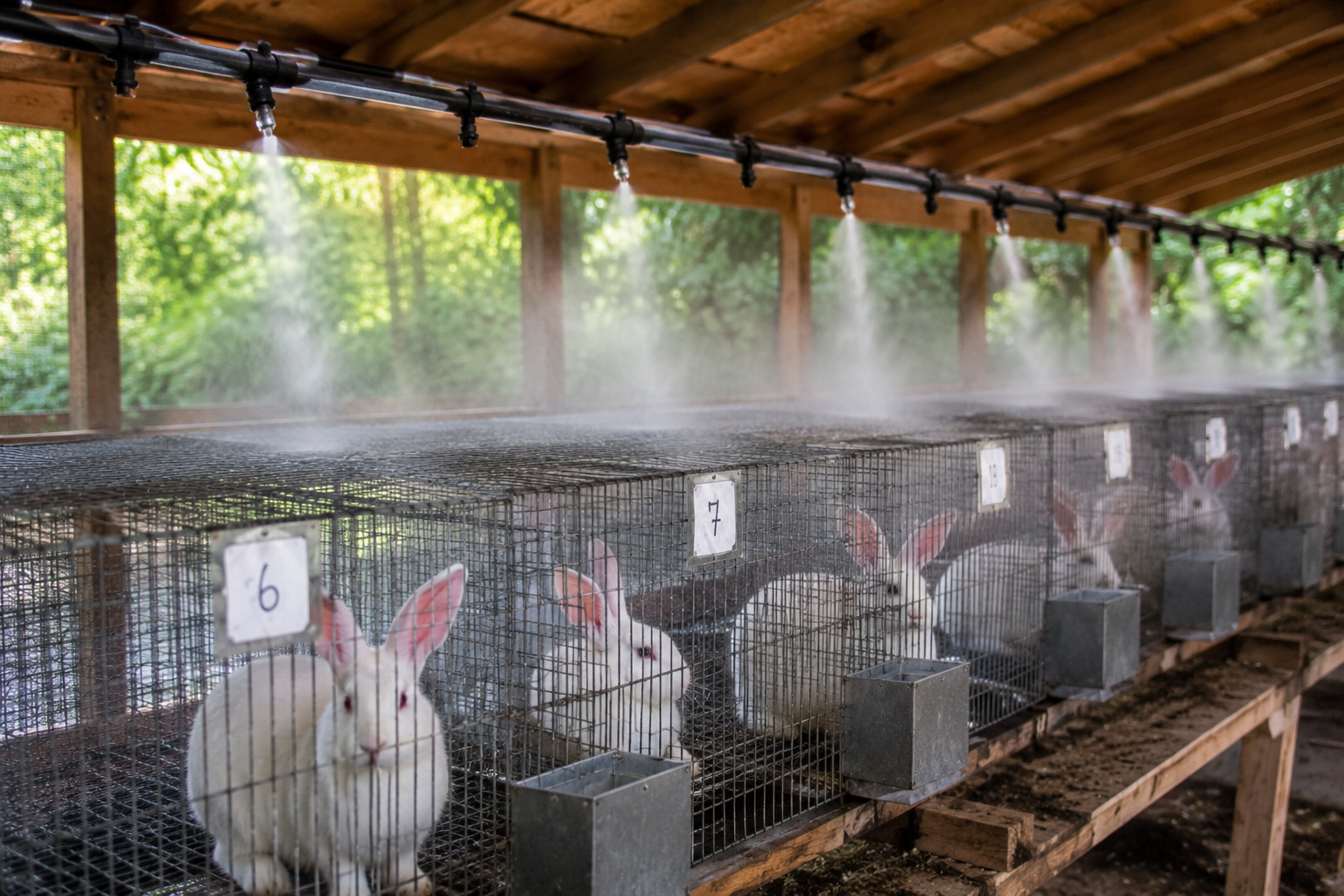
If you’re running a backyard rabbitry and your goal is healthy rabbits, healthy breeding stock and sustainable production, I don’t see much reason to rush.
Twenty-one-day weaning is possible.
Twenty-eight-day weaning is possible.
Six-week weaning is possible.
Some breeders wait until eight weeks.
For my system, around six weeks with gradual weaning gives me a comfortable balance.
The babies are eating solid food and drinking water. They’re considerably more developed than they were at three or four weeks. I can remove the largest rabbits first, give the smaller kits additional time and gradually reduce the nursing demand placed on mama.
That’s what we’re really trying to accomplish.
Weaning shouldn’t be about getting baby rabbits away from their mother as quickly as possible.
It’s about moving them from one stage of life to the next with as little unnecessary stress as possible.
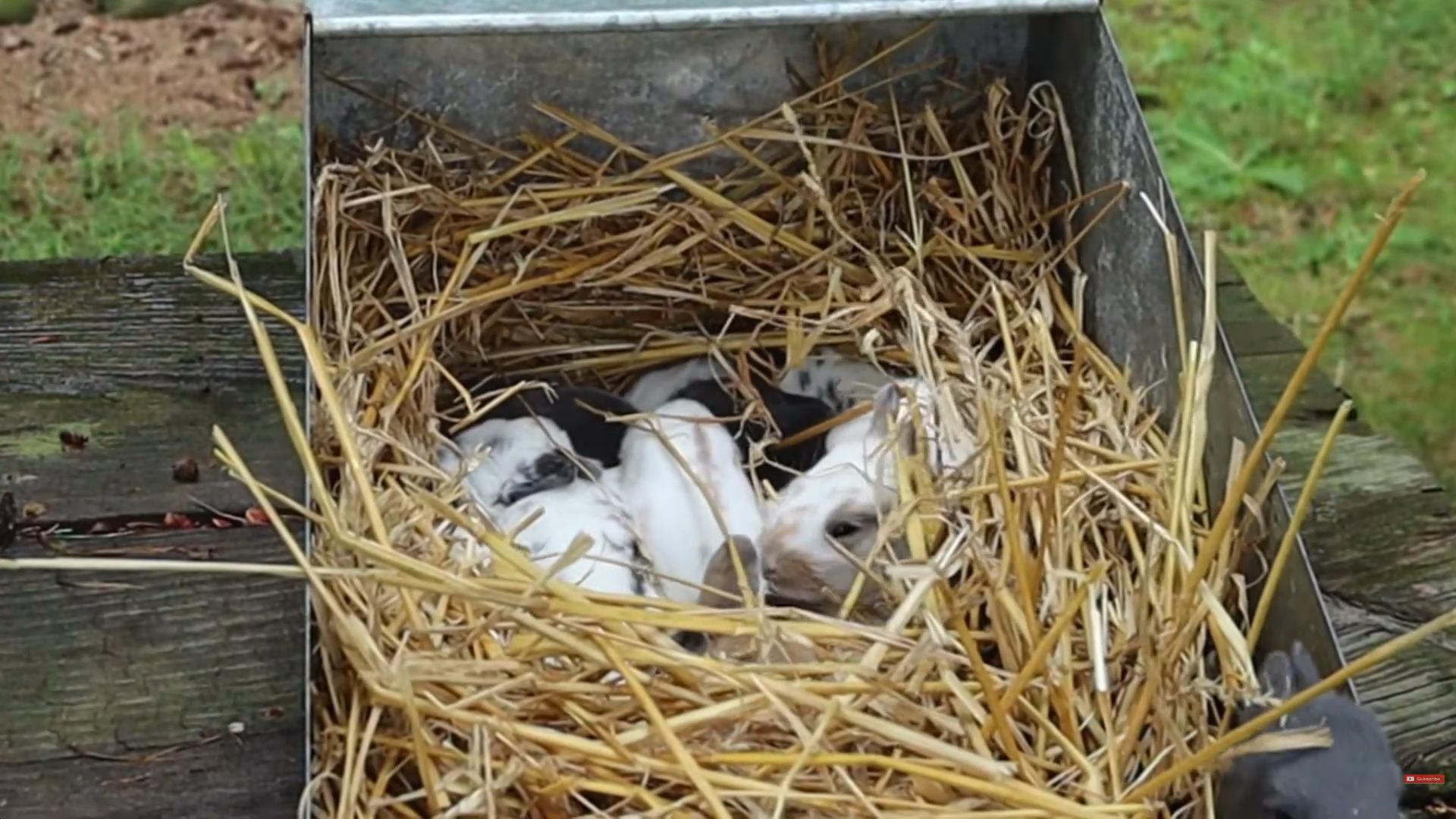
Every healthy grow-out rabbit starts here. Good weaning management is simply the next step in raising that litter successfully.
The Rabbitry Center
Our goal is to help backyard rabbit raisers build healthier, more productive and more sustainable rabbitries.
If you have a different weaning schedule that works well in your rabbitry, leave a comment and share your experience. There are a lot of different ways to raise rabbits successfully, and good rabbit management always starts with paying attention to the animals in front of you.