Feed Your Rabbits for Less: The Natural Feeding System

- Description
- Curriculum
- FAQ
- Reviews
- Grade
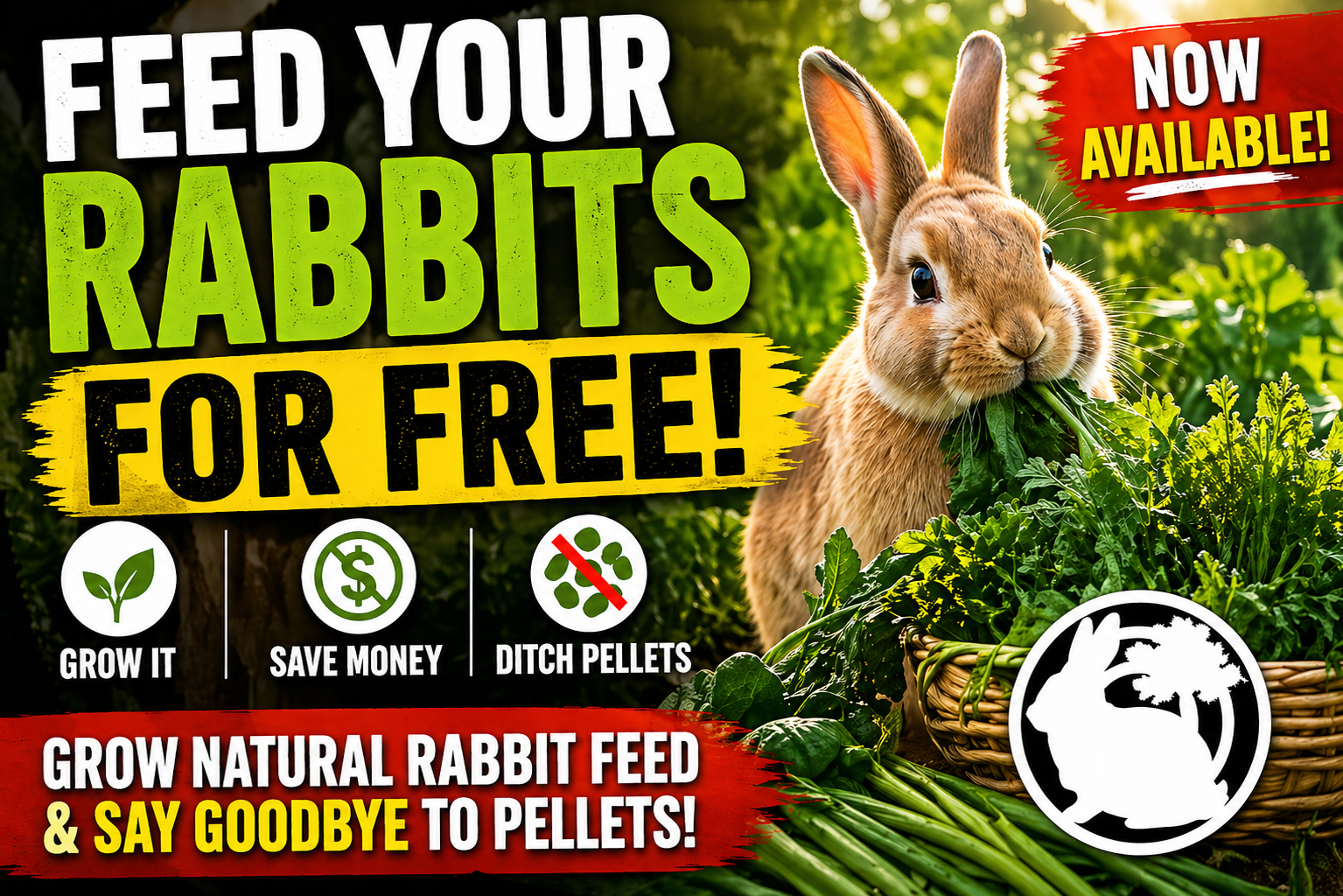
Learn how to grow your own natural rabbit feed and reduce your reliance on store-bought pellets. In this course, we walk through exactly how we produce fresh, sustainable feed using raised beds, food plots, fodder systems, and forage—right from our own rabbitry.
You’ll learn why we do it, how we do it, and how you can build a system that works in real life—not just in theory. Whether you’re looking to save money, improve feed quality, or become more self-sufficient, this course gives you a practical, step-by-step approach to making it happen.
-
1
 Why We Grow Our Own Feed
Pellet feed became the standard for one main reason:
👉 Convenience
Since the early days of commercial feed mills (1920s), most crops like corn and soybeans have been funneled into livestock feed production.
Pellet was designed to be:
- Consistent
- Easy to store
- Simple to feed
And it works.
But here’s what to think about after watching the video:
- You don’t fully control what’s in pellet
- It’s a processed feed source
- Costs continue to rise over time
👉 Rabbits, however, are naturally built for high-fiber, forage-based diets.
-
2
Why Growing Your Own Feed Matters More Than Ever
There was a time when almost every household had:
- A garden
- A small meat source (rabbits, chickens, etc.)
- A level of self-sufficiency
During times like World War II, raising animals like rabbits wasn’t optional—it was necessary.
But over time, as convenience increased, that system faded.
Fast forward to recent years…
When supply chains were disrupted and prices increased, many people were forced to rethink how dependent they were on:
- Store-bought food
- Commercial feed
- Outside systems
👉 That’s when interest in rabbits, gardening, and homesteading surged again.
-
3
Why Hay Is the Foundation of Your Rabbit Feeding System
When it comes to feeding rabbits, one thing matters more than anything else:
👉 Hay is king
In a well-balanced feeding system:
- About 70% of the diet should be hay
- The remaining 30% can come from greens, forage, and plants
Hay provides:
- Essential fiber
- Digestive stability
- Consistency in your feeding program
Without enough hay, even the best fresh feed system can fail.
-
4
How a Rabbit’s Digestive System Really Works
Rabbits are not like cows, goats, or deer.
Those animals are ruminants, meaning they have multi-chambered stomachs designed to break down food differently.
👉 Rabbits are hindgut fermenters
That means:
- They have a single stomach
- Their digestion relies heavily on the cecum
- Fiber is absolutely critical to their health
Because of this system, rabbits:
- Cannot extract all nutrients the first time food passes through
- Must rely on a second digestion process
-
5
 Pellet vs Natural Feed + Rabbit Digestion Quiz
-
6
How to Safely Transition Rabbits Off Pellet
Transitioning your rabbits off pellet isn’t complicated—but it must be done correctly.
👉 The biggest mistake:
Switching too fastRabbits rely on gut bacteria to digest food.
If you change their diet too quickly, you risk:- Digestive issues
- Diarrhea
- Serious health problems
A simple, gradual system over 3–4 weeks allows:
- Gut bacteria to adjust
- Rabbits to adapt safely
- A smooth transition without losses
-
7
Using Rabbit Tractors to Reduce Feed Costs
Rabbit tractors are one of the simplest ways to:
- Reduce feed costs
- Utilize natural grass and weeds
- Grow out rabbits efficiently
In the right setup, you can feed rabbits almost entirely for free during the final stage of growth.
But like any system, it must be done correctly.
-
8
How to Build a Rabbit Tractor (Step-by-Step Overview)
This rabbit tractor is designed to:
- House an entire litter
- Be lightweight and movable
- Allow rabbits to feed directly on grass
- Reduce feed costs during grow-out
👉 This system is best used during the final month of growth
Key features include:
- Wire floor for protection
- Corrugated top for shade
- Wheels for mobility
- Access door for handling
- Parts List : https://therabbitrycenter.com/how-to-build-a-rabbit-tractor-thats-safe-from-predators-easy-to-move-around-the-yard/
-
9
Rabbit Tractor Adjustments (Real-World Lessons & Fixes)
Once you start using a rabbit tractor, you’ll quickly learn:
👉 The build is only half the equation
Real-world conditions like:
- Weather
- Rabbit behavior
- Terrain
…will force you to make adjustments.
Small improvements—like adding hardware cloth or modifying handles—can make a big difference in:
- Safety
- Ease of use
- Rabbit health
-
10
The 4-Phase System for Transitioning Off Pellet
Transitioning off pellet doesn’t have to be confusing.
👉 This system breaks it down into 4 simple phases
Each phase allows:
- Your rabbit’s gut to adjust
- New bacteria to develop
- A safe, controlled transition
Rabbits are hindgut fermenters, so this process takes time. Moving too fast can lead to serious health issues.
Measuring Cups For Measuring Cup System
-
11
Final Phases: Reducing Pellet and Building a Flexible System
As you move into the final phases of transitioning off pellet:
👉 The goal is not just elimination—it’s control and flexibility
You’ll:
- Reduce pellet to very small amounts
- Rely primarily on fresh feed
- Build a system that can adapt when needed
And most importantly:
👉 You’ll learn how to adjust if something goes wrong
Scythe handle, Blade & Sharpener
Scythe handle
Blade
Sharpener
-
12
Rabbit Feed Transition & Tractor System
-
13
Complete Feed System: What to Grow and How It Works Together
If you want to reduce or eliminate pellet:
👉 You need to grow a variety of feed sources
Not just one thing.
A strong system includes:
- Food plots
- Trees and shrubs
- Raised beds
- Natural forage
The goal is simple:
👉 Create a property that feeds your rabbits year after year
-
14
Hay Sourcing, Fodder Trees, and Winter Feeding Systems
A complete rabbit feed system isn’t just about summer.
👉 You need a plan for:
- Hay
- Perennials (trees, bushes)
- Winter feeding
Whether you grow or buy hay, and whether you plant trees or hedges, the goal is the same:
👉 Create a system that feeds your rabbits year-round
-
15
Rabbit Manure & Fertilizer Tea (Feeding Your Garden Naturally)
Rabbit manure isn’t waste…
👉 It’s one of the most valuable resources in your entire system
You can use it to:
- Fertilize your garden
- Boost plant growth
- Reduce or eliminate store-bought fertilizer
And best of all:
👉 It can be used immediately without composting
Manure Fork
Action Hoe
Hardware Cloth
1/2" Staples
Staple Gun
-
16
Greenhouse Build & Setup (Extending Your Feed System)
A greenhouse allows you to:
- Start plants earlier
- Grow later into the season
- Protect your feed system from weather
In colder climates, this can make a huge difference.
👉 You’re not just growing plants…
You’re extending your entire systemYITAHOME 20x10x6.5ft Greenhouse Large Heavy Duty Tunnel Green House
WIFI Thermostat
-
17
Rabbit Feed System & Sustainability Quiz
-
18
You Don’t Need Big Equipment
In this lesson, you’ll learn how to build and maintain productive food plots without expensive or large-scale equipment. Whether you’re working a small property or just getting started, this lesson breaks down the exact tools used to prep, plant, and maintain a plot efficiently.
You’ll see how a simple riding mower, a few affordable tow-behind tools, and even a hand tool like a scythe can replace thousands of dollars in machinery. This lesson focuses on practical, real-world systems that are affordable, repeatable, and proven to work.
The Rabbitry Center's Food Plot Seed Blend
By the end, you’ll understand:
- How to prep soil without heavy equipment
- The purpose of each tool in the process
- How to improve seed germination and success rates
- Why simplicity often beats complexity in food plot systems
-
19
Glyphosate Explained: Safe Food Plot Prep and Common Misconceptions
In this lesson, we address one of the most misunderstood topics in food plot preparation—the use of glyphosate. You’ll learn the difference between improper, high-exposure use and the controlled, pre-plant application we use in this course. I’ll also share my background in pesticide application and explain why this method, when used correctly, is one of the most effective and responsible ways to establish a clean, productive food plot for your rabbits.
-
20
How to Create a Rabbit Food Plot (Step-by-Step)
Creating your own rabbit feed doesn’t require a massive farm or expensive equipment. In this lesson, you’ll learn how a relatively small plot—sometimes as little as 600 square feet—can produce a significant portion of your rabbits’ weekly feed.
We’ll walk through the entire process, including:
- How much space you actually need
- Why soil testing matters (and when to ignore it)
- The easiest way to clear and prepare your plot
- How to properly seed and fertilize for maximum growth
- Common mistakes that lead to poor yields
Whether you're working with a backyard setup or scaling into multiple plots, this lesson will give you a simple, repeatable system to grow consistent, high-quality feed for your rabbits.
-
21
Locking in Your Seed (The Rolling Step)
In this lesson, you’ll learn how to take your food plot from seed to usable feed for your rabbits. We’ll cover one of the most overlooked parts of the process—what happens after planting.
You’ll learn how to:
- Improve germination using simple techniques like rolling
- Know exactly when your plot is ready to harvest
- Properly dry and store forage for winter feeding
- Avoid common mistakes (like feeding fermented grass clippings)
- Use simple tools inside your rabbitry to make feeding and watering easier
Daily Portion Measuring Cup
Fresh Greens Feeder-Holds Your Greens
Learn to Build Hay Feeder on this video
This lesson bridges the gap between growing feed and actually using it efficiently in your rabbitry.
-
22
Producing Your Own Hay for Rabbits
In this lesson, you’ll learn how to produce one of the most important components of a rabbit’s diet—high-quality hay—right from your own property.
We’ll walk through:
- The best hay varieties to grow
- How much land you actually need
- Why watering is critical for success
- How to properly harvest and dry hay
- What to do (and what NOT to do) when weather becomes a problem
- How to make your own hay bales without expensive equipment
This lesson gives you a realistic, hands-on system for producing hay that can replace store-bought feed and dramatically cut costs.
-
23
Building Your Hay System (Grow, Source, and Feed)
In this lesson, we’re stepping back and focusing on the most important part of your rabbits’ diet—hay.
You’ll learn:
- Why hay is essential for rabbit health
- What to look for in commercial feed vs natural fiber sources
- The realities of growing your own hay (successes and failures)
- How much hay you actually need
- How to source hay affordably from farmers
- How to reduce waste with better feeder design
This lesson is all about building a system that ensures your rabbits always have access to high-quality fiber, without overspending.
-
24
Understanding Your Limitations (and Opportunities)
Designing a rabbit food system isn’t just about planting a small plot—it’s about building a complete, sustainable feeding strategy. In this lesson, you’ll learn how much space you actually need, what a realistic yield looks like, and why diversity in your feed sources matters more than size alone. We’ll also cover property layout, sunlight requirements, and how to avoid costly mistakes when planning your food production system.
-
25
Why Food Plots Work So Well
Food plots don’t have to be complicated—but they do need to be intentional. In this lesson, you’ll learn exactly what to plant, how to layer your crops for year-round production, and how to build a simple system that produces massive amounts of rabbit feed. We’ll cover proven plant options, rotation strategies, and practical harvesting tips so you can avoid overwhelm and start growing feed immediately.
-
26
Food Plot, Hay & Equipment Quiz
-
27
Why Raised Beds Work So Well
Raised beds are one of the simplest and most efficient ways to grow consistent, high-quality rabbit feed—but only if they’re built and managed correctly. In this lesson, you’ll learn how to position your beds for maximum sunlight, build them to last, create the right soil mix, and maintain them year after year. We’ll also cover irrigation, harvesting, and how to use cover crops to keep your soil productive and your rabbits fed early in the season.
-
28
How to Build a Durable, Protected Raised Bed
Raised beds don’t need to be complicated or expensive—but they do need to be built right.
In this lesson, I’m going to walk you through exactly how I built one of our raised beds from start to finish using simple materials and tools. We’ll cover how to square it up, secure it so it lasts, and most importantly—how to protect your crops from deer using a simple hoop system.
If you’ve ever struggled with warped lumber, uneven beds, or animals destroying your garden overnight, this lesson is going to save you a lot of frustration.
-
29
Simple Garden Watering System
Are you spending an hour every night watering your garden?
There’s a better way.
In this lesson, you’ll learn how to set up a simple, affordable watering system that can handle multiple raised beds automatically. We’ll cover how it works, what you need, and how to set it up in a way that saves time while keeping your plants consistently watered.
This is one of those small upgrades that can completely change how you manage your garden.
-
30
Building a Rabbit-Focused Garden
What should you actually grow in your raised beds for rabbits? In this lesson, we simplify the overwhelming number of options and focus on proven vegetables, herbs, and companion planting strategies that work together. You’ll learn how to grow nutrient-dense feed, improve plant health naturally, and design a raised bed system that produces a balanced diet for your rabbits—without relying on pellets.
-
31
Why Herbs Matter in a Rabbit System
Herbs are one of the most powerful—and most overlooked—tools in a rabbit feeding system. In this lesson, you’ll learn which herbs to grow, how they support digestion, immunity, and overall health, and how to use them as both nutrition and natural remedies. We’ll break down the best herbs for your rabbitry, how often to feed them, and how to build a system that benefits both your rabbits and your homestead.
-
32
Why Comfrey Is a Must-Have on Every Homestead
Comfrey might be the most valuable plant you can grow on your homestead—and especially in a rabbitry. In this lesson, you’ll learn why comfrey is considered a “super plant,” how it supports rabbit health, improves your soil, and even creates an additional income stream. We’ll cover harvesting, feeding, propagation, and practical ways to use comfrey throughout your entire system.
-
33
Raised Beds, Irrigation & Herbs Quiz
-
34
How to Prevent Mold When Growing Fodder
One of the most common questions I get is:
“How do you grow fodder without mold?”It’s a valid concern. Mold is the number one issue people run into when growing fodder, especially when they’re just getting started. The good news is—it’s very easy to prevent when you understand the process.
Let’s walk through it step by step.
-
35
Why Fruit Trees Matter
Fruit trees are one of the most valuable long-term investments you can make on your property. They provide food for your family, your rabbits, and even attract wildlife like deer. In this lesson, you’ll learn how to choose the right trees, plant them properly, protect them from damage, and manage them for consistent yearly production. We’ll also cover pruning, fertilizing, and pest prevention—including simple, low-chemical approaches like dormant oil sprays.
-
36
Why Fodder Trees Matter
Fodder trees are one of the most overlooked but powerful tools in a rabbit feeding system. In this lesson, you’ll learn how to grow, manage, and harvest high-protein tree forage that can feed your rabbits year after year. We’ll cover the best fodder tree species, cutting techniques like coppicing and pollarding, and how to turn your property into a productive, self-sustaining food forest.
-
37
Why Bushes & Woody Browse Matter
Shrubs, hedges, and woody browse are a critical piece of a complete rabbit feeding system. In this lesson, you’ll learn how to use bushes and vines to create a long-term, self-sustaining food source that provides both nutrition and fiber. We’ll cover the best species to plant, how to design your property for year-round production, and why variety is the key to keeping your rabbits healthy and productive.
-
38
Why Tree Hay Matters
Tree hay is one of the oldest—and most effective—ways to feed livestock, including rabbits. In this lesson, you’ll learn how to harvest, process, and store tree fodder so you can feed your rabbits through the winter without relying on store-bought feed. We’ll also cover how to combine tree hay with crops like comfrey and winter wheat to create a complete, year-round feeding system.
-
39
Why Clone Your Own Trees
Cloning your own fodder trees is one of the fastest ways to scale a rabbit feeding system—and it’s easier than most people think. In this lesson, you’ll learn how to take simple cuttings, root them in water, and turn them into productive trees in just weeks. We’ll cover the best trees to clone (not just willow), how to transplant them, protect them, and even turn them into a profitable product for your rabbitry.
Get Free Shipping Supplies Sent To Your Address
Plastic Bag Roll For Roots-350 Bags
Licenses & Certificates
Be sure to check your state regulations because if you want to sell and mail small trees (e.g., weeping willows) from Michigan you’ll typically need: a Michigan nursery license (grower/dealer/registered dealer depending on your situation), annual nursery inspections/certificates for the stock, a sales-tax registration if you sell retail, and — when shipping out of state or internationally — phytosanitary/certification paperwork (and to follow USPS packaging/marking rules). APHIS+3Michigan.gov+3Michigan.gov+3
-
40
Trees That Ship Well
Shipping live plants might sound complicated, but it’s actually simple when you understand the process. In this lesson, you’ll learn exactly how to prepare, package, and ship fodder trees like willow, poplar, and alder so they arrive healthy and ready to plant. We’ll also cover packaging options, moisture control, customer communication, and how to turn small saplings into a scalable product for your rabbitry.
Get Free Shipping Supplies Sent To Your Address
-
41
Fodder, Fruit Trees & Tree Hay Quiz
-
42
Levels of Feeding Rabbits From What You Grow
Providing food that you grow for your rabbits is one of the biggest steps you can take toward independence, cost savings, and healthier animals. But this doesn’t happen overnight—it happens in stages.
In this lesson, you’ll learn the different levels of feeding rabbits using homegrown feed, how to properly reduce pellets as you increase natural feed, and why starting small is the key to long-term success.
Whether you're planting your first fodder tree or working toward producing nearly all your rabbit feed, this lesson will help you understand where you are—and how to level up.
-
43
Becoming Your Own Feed Supplier
What happens when you stop relying on the feed store… and start producing your own rabbit feed?
In this lesson, we step back and look at the bigger picture—how growing your own feed changes not just your rabbitry, but your mindset. You’ll see real-world proof of how rabbit manure transforms soil, why you don’t need a large property to succeed, and how to build a system that works for your life.
Most importantly, you’ll learn how to move toward self-sufficiency without overcomplicating your setup.
The Rabbitry Center's Food Plot Seed Blend
-
44
Rabbit Feed System – Final Exam
Learn how to grow and manage your own rabbit feed using raised beds, forage, and fodder systems—so you can reduce costs and rely less on pellets.
Keep this simple and non-intimidating:
- No prior experience required
- Basic space for growing feed (backyard, raised beds, or small plot)
- Willingness to learn and apply a system over time
- Rabbit breeders and homesteaders
- Anyone looking to reduce feed costs
- Beginners wanting to start a rabbitry the right way
- Experienced rabbit raisers wanting more control over feed